

 InfoSearched
Public health experts are already warning that reopening the country too soon could summon a second wave of COVID-19 far worse than the first.
As governors and the Trump administration hashed out guidelines for reopening the economy in mid-April 2020, epidemiologists cautioned that lifting stay-at-home orders and social distancing rules prematurely could trigger a resurgence that dwarfs the initial outbreak. The virus, they stressed, hasn’t been beaten — it’s been suppressed by lockdowns, travel bans, and mask-wearing, while the vast majority of Americans remain susceptible to infection. With no vaccine and no proven antiviral cure on the market, the question wasn’t whether a second wave was possible, but how bad it could get.
- Global confirmed coronavirus cases surpassed 1.5 million with more than 125,000 deaths by April 15, 2020, according to Johns Hopkins University data.
- Epidemiologists drew direct comparisons to the 1918 Spanish flu pandemic, noting its second wave proved far deadlier than the initial outbreak.
- Experts warned that easing lockdowns without robust testing and contact-tracing infrastructure in place could accelerate a resurgence, especially if it collided with the seasonal flu in autumn or winter.
The Numbers Driving the Warning
By mid-April, the pandemic’s global toll had already crossed 1.5 million confirmed cases and 125,000 deaths, per Johns Hopkins tracking. Those figures came even as several states began weighing timelines to loosen stay-at-home orders, a tension that put governors, the White House, and public health officials on divergent tracks. The debate mirrored fights playing out state by state, where officials in some regions moved to tighten restrictions even as others discussed loosening them.
Lessons From the 1918 Pandemic
Historians and public health researchers pointed to the 1918 Spanish flu as the cautionary blueprint. That pandemic didn’t hit hardest in its first wave — its second wave, which arrived months later, killed far more people than the initial outbreak did. Epidemiologists said that pattern of viral outbreaks moving in successive waves, often worsening before they fade, was the exact scenario keeping health officials up at night in April 2020.
The virus hasn’t been eliminated — it’s been suppressed by mitigation measures, and a large share of the population remains susceptible.
The Reopening Gamble
Health specialists emphasized that the trajectory of any second wave depended almost entirely on two things: whether Americans kept following social distancing protocols, and whether states built out sufficient testing and contact-tracing capacity before easing restrictions. Asymptomatic spread remained a lingering threat precisely because so much of the population had no immunity and no treatment options existed. That uncertainty fed directly into the modeling debates unfolding at the time, including projections warning of a jump in the death toll if mitigation slipped.
A Collision With Flu Season
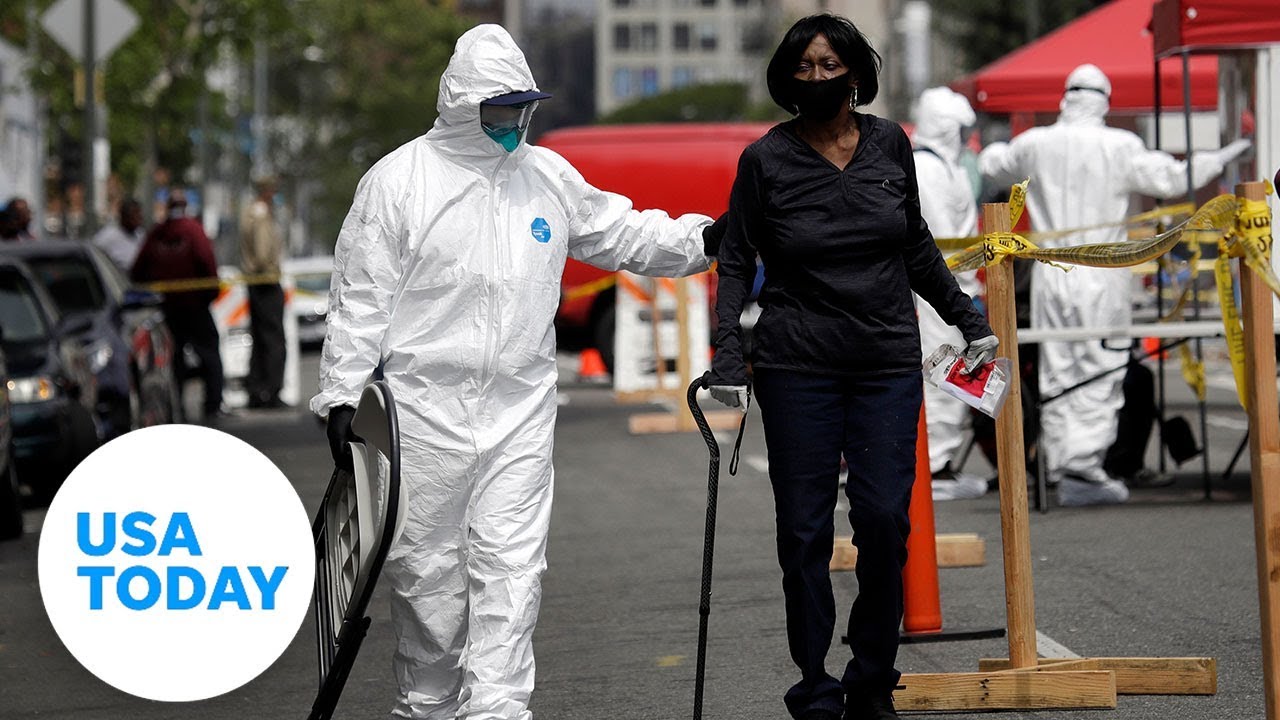
Perhaps the gravest concern raised by public health officials was timing: an autumn or winter resurgence of COVID-19 would land squarely during the seasonal flu, doubling up on respiratory illness at the exact moment hospitals and ICUs were already worn down from the spring surge. That scenario — two respiratory outbreaks straining the same beds and the same staff — was cited as the worst-case outcome experts were racing to avoid by pushing for testing infrastructure before any reopening moved forward.
None of it changed the basic math sitting in front of governors that week: reopen too fast without testing and tracing in place, and the second wave could look a lot like the one that hit America in the spring — only worse, and arriving right as flu season starts filling up the same hospital beds.


Chinese economy is going through transformation: BNP Paribas China CEO | East Tech West
Coronavirus Cases Hit 174,000 Worldwide, Deaths Exceed 7,000
Jeff Zucker resigns from CNN in stunning announcement
A Man Drank 1 Bottle Rubbing Alcohol For COVID-19. This Is What Happened To His Brain.
Coronavirus/covid-19: Is this how freedom dies?