

 InfoSearched
Two anti-abortion bills hit the Senate floor Tuesday, and neither one had the votes to survive a filibuster.
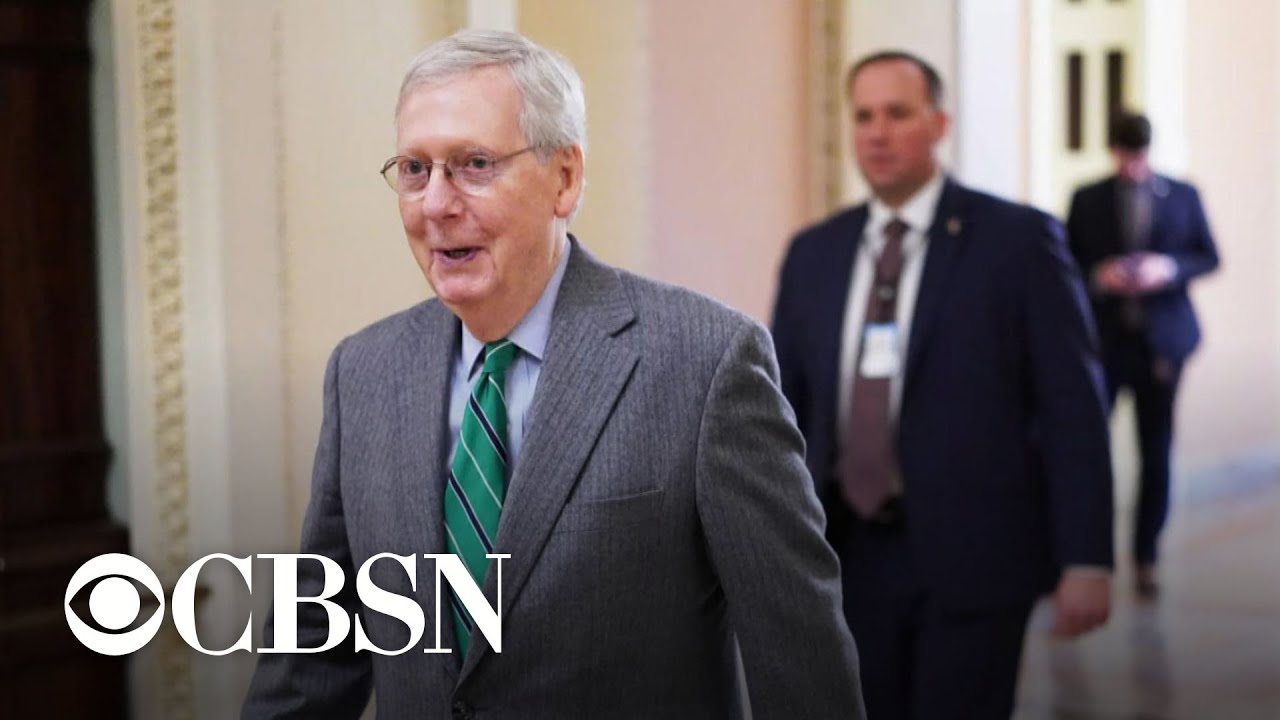
The Senate spent Tuesday, February 25, 2020, working through a pair of Republican-backed abortion restrictions that Majority Leader Mitch McConnell scheduled knowing full well they’d fall short. Both measures needed 60 votes to clear procedural hurdles, and both came up short, but not before forcing on-the-record votes from senators who’d rather not be casting them heading into an election year.
- The Pain-Capable Unborn Child Protection Act, sponsored by Sen. Lindsey Graham, failed on a 53-44 cloture vote; it would have banned abortions after 20 weeks with exceptions for rape, incest, or to save the mother’s life.
- The Born-Alive Abortion Survivors Protection Act, sponsored by Sen. Ben Sasse, failed 56-41; it would have imposed criminal penalties and up to five years in prison on providers who don’t give standard medical care to infants born alive after an abortion attempt.
- Democratic Sens. Joe Manchin and Bob Casey voted for the 20-week ban, and they were joined by Doug Jones on the born-alive bill, while GOP Sens. Susan Collins and Lisa Murkowski split their votes — no on the 20-week ban, yes on the born-alive measure.
Breakdown of Election Voting Results
Neither bill was new. Both had already cleared the Republican-controlled House earlier in the session, and both arrived in the Senate as messaging votes as much as legislation. The 20-week bill needed 60 votes for cloture and got 53, with Manchin and Casey crossing party lines to support it while Collins and Murkowski — the chamber’s two most reliably pro-choice Republicans — voted no.
The born-alive bill performed slightly better on paper, pulling 56 votes to 41 against, but still fell four short of the threshold. This time three moderate Democrats — Jones of Alabama, Manchin of West Virginia, and Casey of Pennsylvania — sided with Republicans, and Collins and Murkowski voted yes as well. Sasse made the floor argument in blunt terms: “We’re talking about killing babies that are born.”
McConnell’s Election-Year Calculation
McConnell didn’t schedule these votes expecting them to pass. The point was to put vulnerable Democrats, particularly Jones — who’s up for re-election in deep-red Alabama — on record before November. On the floor, McConnell framed Democratic resistance as a “radical fringe position on elective abortion,” language built for campaign ads rather than legislative persuasion.
That framing fits into the broader 2020 map, where abortion is shaping up as a wedge issue Republicans plan to lean on aggressively. It’s the same electoral terrain that has Democratic contenders sharpening their own messaging, as seen in how Joe Biden’s campaign has rolled out policy positioning designed to hold together a coalition that includes both moderates like Manchin and the party’s progressive base.
“We’re talking about killing babies that are born.”
The Democratic Response
Sen. Catherine Cortez Masto led the Democratic pushback, describing the legislation as an attempt to “turn back the clock on women’s health care.” Physicians who testified against the 20-week ban pointed out that abortions performed after that point account for barely 1.2% of all procedures, and typically involve severe medical crises or pregnancies that aren’t viable — not elective, late-term decisions made casually.
That clinical detail matters because it’s the crux of the Democratic argument: the bill’s sponsors were writing law around a narrative that doesn’t match the actual medical picture. Democrats have made similar arguments before at party gatherings, including moments where figures like Barack Obama has pressed the party to stay unified heading into a cycle where reproductive rights will be a top-tier issue on the ballot.
Timing Next to the Supreme Court
The Senate votes landed just a week ahead of oral arguments at the Supreme Court in a major case out of Louisiana over abortion clinic regulations — a dispute that could reshape access far more directly than a failed Senate bill ever could. With that case already on the docket, Tuesday’s votes read less like an attempt to change the law and more like both parties staking out ground before the fight moves to the Court and then to the ballot box in November.







I’m 16 and went to the hospital twice for COVID-19. This is what it’s like l GMA Digital
Brexit: What happened on Tuesday? – BBC News
Why The Left Can’t Handle Donald Trump | Russell Brand
4 kids recovering from injuries after a car slammed into day care in Philadelphia
Why The Left Can’t Handle Donald Trump | Russell Brand