

 InfoSearched
Inside Brooklyn’s ultra-Orthodox neighborhoods, the coronavirus forced centuries of ritual to move online almost overnight.
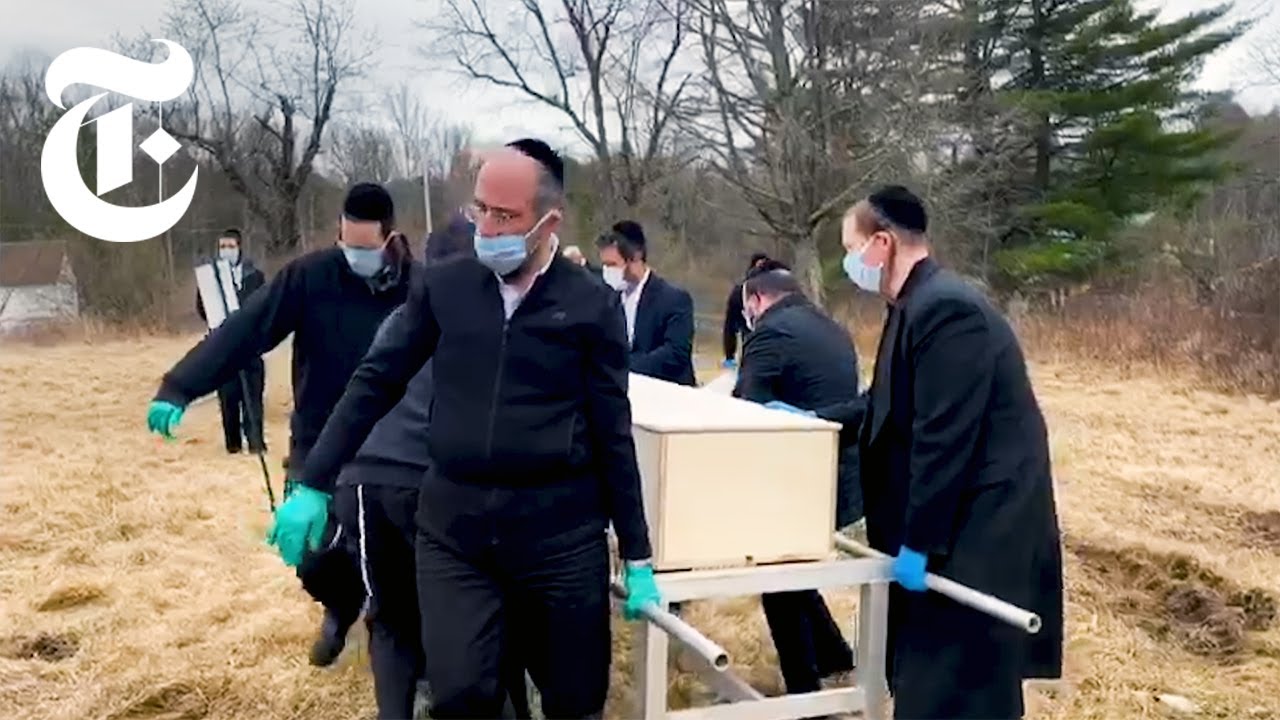
In Borough Park, Crown Heights and Williamsburg, communities built around dense apartment living, packed synagogues and the physical presence of mourners at a shiva have spent weeks tearing up the playbook. A New York Times video report, “Zoom Shivas and Prayer Hotlines: Ultra-Orthodox Jewish Traditions Upended,” documents how the virus tore through neighborhoods that had little precedent for social distancing and even less appetite for the internet. By mid-April 2020, the human toll was already staggering community leaders themselves.
- Community leaders and funeral homes estimated that hundreds of ultra-Orthodox Jews in New York City had died from the virus by mid-April, with early spread tied in part to dense housing and large gatherings during the March holiday of Purim.
- Traditional shivas, which normally draw dozens or hundreds of visitors into a mourner’s home over seven days, gave way to Zoom calls as families tried to preserve the ritual without the physical gathering.
- Synagogues and community organizations set up dedicated telephone prayer hotlines so homebound residents without internet access could still listen to and recite services in real time.
A Death Toll Rooted in Purim and Density
The virus found ideal conditions in neighborhoods where multigenerational families often share small apartments and where communal life revolves around close physical contact — packed sanctuaries, crowded study halls, and large family celebrations. Community leaders and funeral home operators told the Times that the spread accelerated in the weeks following Purim in early March, when synagogues and homes were still filled with celebrants unaware of how far the virus had already traveled. By the time officials and rabbis grasped the scale of the outbreak, hundreds of deaths were already being counted across Borough Park, Crown Heights and Williamsburg.
Community leaders and funeral homes estimated that hundreds of ultra-Orthodox Jews in New York City had already died from the virus by mid-April.
Zoom Shivas Replace the Home Visit
The shiva — seven days of mourners receiving visitors, sharing food and reciting prayers together in the home of the bereaved — is one of the most physically communal rituals in Jewish practice. With gatherings banned, families began holding shivas over Zoom, with relatives and friends logging in from separate homes to offer condolences on screen instead of in person. For a community with a long history of limiting internet use, the shift to videoconferencing marked a striking departure from custom, one driven purely by necessity rather than any softening on the use of secular technology.
Prayer Hotlines Fill the Silence of Shuttered Synagogues
With synagogues, yeshivas and mikvahs all closed under public health orders, community organizations moved quickly to build telephone-based alternatives. Prayer hotlines and conference-call systems let residents — including elderly members without smartphones or broadband — dial in and recite services simultaneously with others, preserving at least the sound of communal prayer even as the physical congregation disappeared. The reliance on the humble telephone, rather than livestreaming apps, reflected how many in these neighborhoods still avoid smartphones and the open internet as a matter of religious practice.
The Halakhic Debate Over a Virtual Minyan
The deeper friction captured in the report is theological. Jewish law requires a minyan — a quorum of ten men — for certain prayers, and rabbinical authorities found themselves debating in real time whether a group joined by video or phone could ever satisfy that requirement, or whether the ritual simply could not happen until synagogues reopened. Some rabbis pushed for narrow, health-driven exceptions on device use; others held the line that Halakha could not be reshaped by a pandemic, leaving mourners and worshippers caught between grief, isolation and unresolved religious guidance.
That question — whether ten voices on a conference line can ever stand in for ten men in a room — remained unsettled as the report aired, with rabbinical leaders in Brooklyn still weighing it neighborhood by neighborhood rather than issuing one unified ruling.







More schools are shutting down due to coronavirus
How Amazon Paid $0 Federal Income Tax in 2018
Sen. Klobuchar On Election Security Legislation, Taking On Trump At Debates
UK Prime Minister Boris Johnson out of ICU amid COVID-19 battle
Investors Split on the State of the U.S. Economy