

 InfoSearched
China just quarantined 18.5 million people overnight to stop a virus nobody fully understands yet.
Before dawn broke over Hubei province on January 23, 2020, Chinese officials pulled the plug on Wuhan — a city of 11 million and a major transport hub — cutting off flights, trains, buses and ferries in and out of the city. Hours later, neighboring Huanggang, home to more than 7 million people, followed with its own shutdown. Combined with earlier restrictions in nearby Ezhou, the moves have sealed off more than 18 million residents just as the country heads into its busiest travel week of the year.
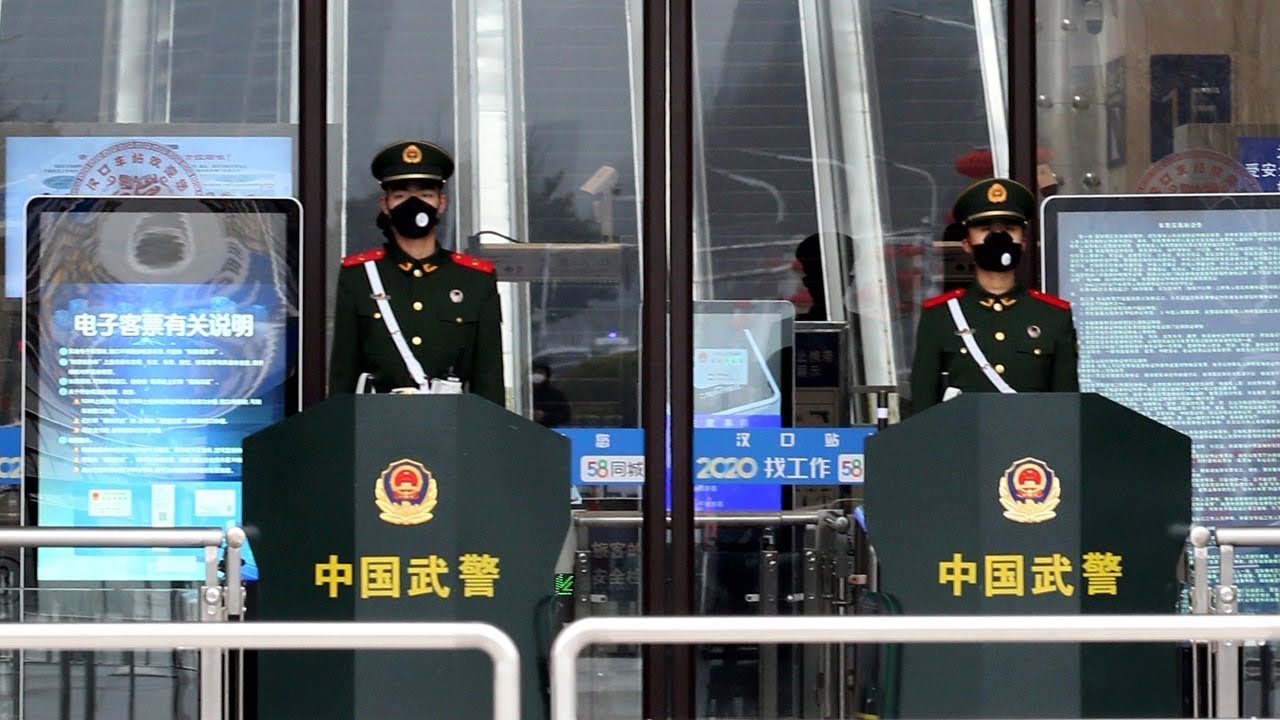
- At 10:00 a.m. local time, Wuhan suspended all outgoing flights, trains, ferries and long-distance buses, and shut down its local subway and bus networks, with police setting up metal barricades at railway stations to turn away ticketless passengers.
- Huanggang ordered a matching transit shutdown effective by midnight and closed cinemas, internet cafes and other public gathering spots.
- The outbreak has killed at least 17 people and infected more than 570 nationwide, with cases also confirmed in the United States, Thailand, Japan and South Korea; all 17 deaths occurred in Hubei province, with victims averaging 73 years old.
A City of 11 Million Sealed Off
Wuhan’s shutdown hit at the worst possible moment for ordinary residents. The lockdown landed just as the Lunar New Year travel rush — the largest annual human migration on Earth — was ramping up, stranding people who’d already booked tickets home. Streets and commercial districts emptied within hours as residents rushed grocery stores to stockpile food, while health officials moved to mandate face masks in public spaces across the city.
Huanggang, roughly 70 kilometers east of Wuhan, mirrored the response almost exactly, halting its own transit network and shuttering cinemas and internet cafes before midnight. Together with Ezhou’s earlier restrictions, the three cities now represent a containment zone unlike anything public health officials have attempted in the modern era. That pattern of sudden, sweeping shutdowns has echoed elsewhere in China during moments of crisis, as seen in earlier coverage of Beijing turning into a virtual ghost town amid unusual animal behavior and coronavirus fears.
The Death Toll and the Numbers Behind It
As of the announcement, Chinese health authorities were reporting at least 17 deaths and more than 570 confirmed infections nationwide. Every recorded fatality occurred in Hubei province, and the average age of those who died was 73 — a detail officials pointed to as a sign the virus was hitting older, more vulnerable populations hardest. Cases had already surfaced outside China as well, with confirmed infections in the United States, Thailand, Japan and South Korea signaling the outbreak was no longer a purely domestic problem.
An Untested Public Health Experiment
Dr. Gauden Galea, the World Health Organization’s representative in China, was blunt about the scale of what Beijing was attempting.
To my knowledge, trying to contain a city of 11 million people is new to science. It has not been tried before as a public health measure. We cannot at this stage say it will or it will not work.
That uncertainty is the crux of the story. Locking down a metropolis the size of Wuhan isn’t a playbook move — it’s an improvised response to a virus that, by January 23, had already outpaced the containment tools typically used for regional outbreaks. Anyone who’s followed China’s history of abrupt, top-down crisis management will recognize the instinct; whether it actually slows transmission is the open question health officials worldwide are now watching.
Life Inside the Barricades
For residents still in Wuhan, the practical reality set in fast. Police and paramilitary units stationed at railway stations turned back travelers without tickets for the last trains out, while long lines formed at supermarkets as families stocked up ahead of an uncertain quarantine period. The subway and city bus system — the backbone of daily movement for millions — simply stopped running, leaving much of the city on foot or stuck at home.
The timing compounds the disruption. Lunar New Year travel typically empties Chinese cities as workers head home to see family; instead, Wuhan and Huanggang residents are being told to stay put indefinitely, with exceptions only for medical emergencies or explicit permission from local authorities.
Whether this holds — and whether other Hubei cities follow Ezhou, Wuhan and Huanggang into lockdown — will depend on how quickly the case count climbs over the coming days. For now, 18 million people are living under travel restrictions no city of comparable size has faced before, and the WHO’s own China representative says nobody can say yet if it’s going to work.







COVID-19 empties out New York
China Hiding MASSIVE Death Toll from Coronavirus
Tank launched into air by chemical factory blast – BBC News
News correspondent speaks out after testing positive for COVID-19
Bernie Sanders Says Path to Democratic Nomination Is Just Not There