

 InfoSearched
A YouTube daredevil just answered the question everyone in Washington state is suddenly asking out loud.
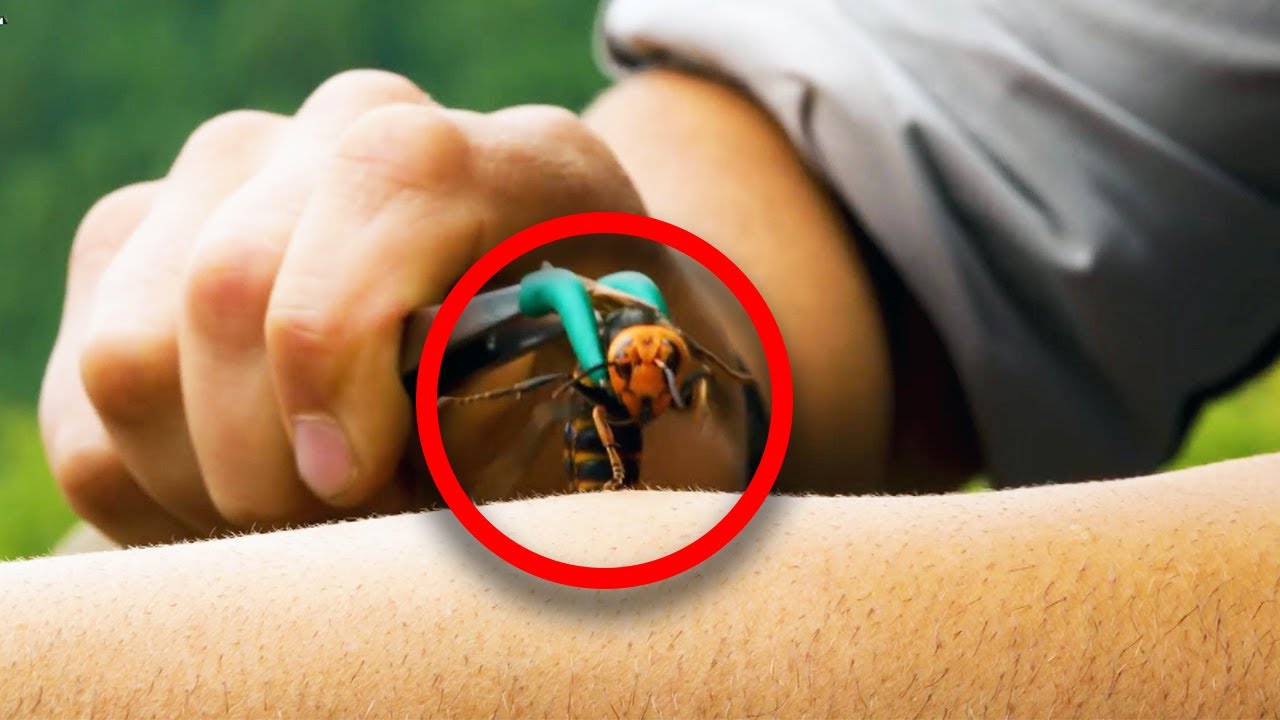
As reports of Asian giant hornets—now branded “murder hornets” in headlines everywhere—spread across the Pacific Northwest, Inside Edition turned to the one man who already knew exactly what the sting feels like. Nathaniel “Coyote” Peterson, the wildlife host behind the YouTube channel “Brave Wilderness,” traveled to a remote stretch of Japan back in 2018 and deliberately let a Japanese giant hornet drive its stinger into his forearm. The footage of that encounter is now getting a second life as scientists confirm the species has reached North American soil.
- Peterson rated the sting a 4 on entomologist Justin Schmidt’s Insect Sting Pain Index, calling it the second-most painful sting of his career, behind only the executioner wasp.
- He described roughly seven hours of intense pain and swelling that lingered for more than 36 hours, comparing the sensation to a red-hot poker held in his arm for six hours straight.
- The species is blamed for an estimated 30 to 50 human deaths a year in Japan, and a single hornet raid can wipe out up to 10,000 honeybees in a hive.
The Sting Heard on Camera
The video shows Peterson’s arm exposed to the hornet, which lands and stings within seconds. He screams, “Searing pain. Absolute searing pain,” as the stinger briefly lodges in his skin before he manages to pull free. Within moments he’s rolling on the ground, and he tells the camera his hand had completely seized up and locked in place—a detail that separates this sting from the dozens of other insect encounters he’s filmed over the years.
“Searing pain. Absolute searing pain.”
Origin of Murder Hornet Name
Asian giant hornets, scientifically Vespa mandarinia, are the largest hornet species on Earth, and their venom carries both neurotoxic and necrotic properties—meaning it attacks nerves while actively breaking down tissue at the sting site. That combination is why Peterson’s arm locked up rather than simply throbbing. Entomologists confirmed the hornets in British Columbia in late 2019 and in Washington state that December, which is what triggered the wave of coverage referencing the arrival of the species in North America.
Put in Context, With Real Caveats
Despite the “murder hornet” label, experts stressed that a single sting to a healthy adult isn’t likely to be lethal. The Japanese death toll of 30 to 50 people annually is tied mostly to allergic reactions or incidents involving mass swarming attacks, not isolated stings like the one Peterson took on camera. The bigger threat, biologists note, is to honeybee colonies—a hive raid by just a handful of these hornets can leave 10,000 bees dead in a matter of hours, a concern that’s drawn extra attention given the sightings’ proximity to agricultural regions of the Pacific Northwest.
Peterson has taken stings from wasps, ants, and everything in between for “Brave Wilderness,” and he’s on record ranking this one second only to the executioner wasp for sheer agony. With the hornets now confirmed stateside, his 2018 Japan footage has become the closest thing most Americans will get to a firsthand account—and, if the swelling timeline he described holds true, probably the closest most of them will ever want to get.





China Hiding MASSIVE Death Toll from Coronavirus
Man hit and killed by plane on Austin, Texas, runway
OH NO JOE! Did Biden Just Have a Stroke Mid-Speech?
Joe Biden is working from home
UN Warns Starvation Tops Virus Risk for Poorest Nations