

 InfoSearched
Oklahoma, one of the reddest states in the country, has somehow become the most deregulated cannabis market in America.
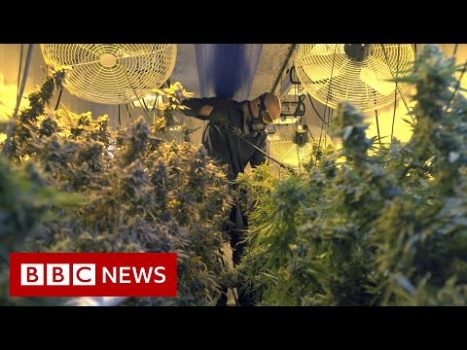
Three years after voters approved medical marijuana at the ballot box, Oklahoma has more licensed dispensaries per person than any other state — more than 2,200 of them, alongside thousands of growers, all competing for a slice of an industry projected to generate roughly $1 billion in retail sales in 2021. BBC News traveled to the state to find out how a conservative stronghold with almost no regulatory guardrails turned into what insiders call the “wild wild west” of weed, following independent operators like Jayne and Vic Grissom as they try to carve out a living in it.
- State Question 788, passed in June 2018, created a medical cannabis program with no cap on business licenses, a $2,500 application fee, and no list of qualifying conditions for a doctor’s recommendation.
- The Oklahoma Medical Marijuana Authority reported more than 11,600 licensed cannabis businesses by early June 2021, including over 2,200 dispensaries and more than 7,800 commercial growers.
- Over 369,000 Oklahomans — nearly 10 percent of the state’s population — are registered medical marijuana patients, giving the state the highest per-capita dispensary and patient counts in the nation.
The Law That Opened the Floodgates
State Question 788 didn’t just legalize medical cannabis in Oklahoma — it set up arguably the loosest set of rules of any program in the country. There’s no statutory cap on how many dispensary, grower, or processor licenses the state can issue. The application fee is $2,500, far below what many other medical markets charge, and there’s no list of qualifying conditions a patient needs to have. A doctor’s recommendation is enough, which has made cannabis accessible to a far broader population than in states with tightly restricted programs. Patients can also legally consume cannabis anywhere tobacco use is permitted, another rule that sets Oklahoma apart.
That combination — cheap licensing, no cap, no condition list — is exactly why the program grew so fast, and why it looks so different from tightly capped markets in states like California, where operators have warned the legal industry itself could collapse under the weight of high fees and heavy compliance costs.
The Numbers Behind the Boom
By early June 2021, the Oklahoma Medical Marijuana Authority’s own data told the story: more than 11,600 licensed cannabis businesses statewide, including over 2,200 dispensaries and more than 7,800 commercial growers. Add it up, and Oklahoma has more licensed dispensaries per capita than any other state in the country. On the patient side, registrations topped 369,000 — nearly one in ten Oklahomans.
$2,500. That’s all it costs to apply for a medical marijuana business license in Oklahoma — a fraction of what other states charge, and the reason more than 11,600 licenses had been issued by June 2021.
Analysts projected the state’s cannabis retail sales would hit roughly $1 billion in 2021, a striking figure for a state that voted for Donald Trump by nearly 20 points in 2020. The market has become a genuine draw for entrepreneurs, both local and out-of-state, looking for a low-barrier entry point into legal cannabis.
Mom-and-Pop Shops in a Crowded Field
That low barrier to entry cuts both ways. For independent operators like Jayne and Vic Grissom, Oklahoma’s program offered something rare in the cannabis business: a realistic shot at opening a dispensary or grow operation without deep-pocketed investors or a byzantine licensing fight. But with more than 2,200 dispensaries and 7,800 growers already competing statewide, that same openness has made standing out — and staying profitable — a constant grind. The BBC’s feature follows the Grissoms navigating exactly that landscape, competing against a flood of new licensees in a market with no cap on how many businesses can chase the same customers.
Cracks in the Free-Market Experiment
The same rules that fueled Oklahoma’s boom have alarmed law enforcement and state officials. With no license cap and minimal oversight, regulators have flagged overproduction as a growing risk — far more cannabis is being grown than the in-state medical market can absorb, raising fears about product diverting into black markets in states where it’s still illegal. Investigators have also pointed to organized crime networks using straw ownership structures to mask who actually controls grow operations and dispensaries, exploiting the state’s light-touch licensing to get a foothold.
Those concerns sit uneasily alongside the economic upside. Oklahoma’s program has created thousands of small businesses and a genuine industry almost overnight, but the lack of caps, inspections, and ownership scrutiny that made that possible is the same thing officials now say needs tightening.
For now, nothing about the structure has changed — the $2,500 application fee, the absence of a qualifying-condition list, and the lack of a license cap are all still in place, which means operators like the Grissoms keep competing in a market that adds new dispensaries and grow licenses every week rather than one that limits them.

Sanders and Biden hold rallies ahead of 6 upcoming primaries
Why black voters are supporting Joe Biden in Democratic primaries
Netanyahu Ousted After 12 Years As Israel’s Prime Minister
Starvation Is Coming – Rancher Explains
WATCH: Trump holds news conference on the coronavirus