

Seattle Just PURGED The CHAZ After Chazistani Police Kill Underage Black Male, Truly Stupid Times
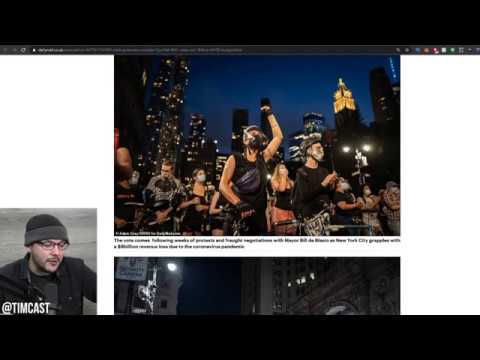
 InfoSearched
Seattle’s police-free experiment on Capitol Hill ends the way Tim Pool said it would — in gunfire, a dead teenager, and a pre-dawn sweep.
Before sunrise on July 1, 2020, Seattle police moved into the six-block stretch known as CHAZ, or CHOP, and cleared it out. Mayor Jenny Durkan had signed an executive order declaring the occupation an unlawful assembly, ending roughly three weeks of a self-governed zone that started as a protest camp and collapsed under its own gunfire. In his Timcast commentary the same day, Tim Pool walked through how an armed, untrained “security” force inside the zone ended up replicating the exact police behavior the occupation was formed to protest — minus any accountability or oversight.
- Seattle police launched the operation to dismantle CHOP on the morning of July 1 after Durkan’s executive order declared the zone an unlawful assembly.
- The clearing followed a June 29 shooting in which armed CHOP volunteer security fired on a vehicle, killing a 16-year-old Black male and critically wounding a 14-year-old — on top of an earlier June 20 shooting that killed a 19-year-old.
- Pool argued the self-appointed security inside the autonomous zone had recreated authoritarian policing without training or accountability, and blamed city leadership for letting the encampment run unchecked until repeated shootings forced action.
Factors Triggering the Recent Sweep
CHOP had survived one deadly shooting already — the June 20 killing of a 19-year-old that the city treated as a policing failure rather than a reason to shut the zone down. It took a second shooting, nine days later, to change that calculus. On June 29, armed volunteers acting as CHOP’s own security fired on a vehicle inside the zone, killing a 16-year-old Black male and critically wounding a 14-year-old. That second death is what pushed Durkan to sign the order and send officers in at dawn.
Pool’s framing in the video was blunt: an occupation that began as a response to police violence had produced its own armed enforcers, and those enforcers had now killed two people inside a space with no functioning 911 response, no trained officers, and no chain of accountability. He tied the collapse directly to the shootings, not to any single political decision — the zone, in his telling, failed on its own terms before the city ever moved to clear it.
An armed encampment that called itself an alternative to policing ended up needing to be policed out of existence.
The Security Force Under Scrutiny
The volunteers patrolling CHOP’s perimeter had taken on the functions of law enforcement — checking vehicles, controlling entry points, carrying firearms — without the training, vetting, or oversight that comes with an actual police department. Pool’s critique centered on that gap: a group with none of the accountability structures of the SPD had been given, or had simply assumed, the exact authority residents were protesting in the first place. When that arrangement produced two shootings and two dead teenagers in nine days, the contradiction became impossible for the city to ignore.
City leadership drew criticism from Pool for the opposite failure — tolerating the armed occupation for weeks despite mounting warning signs, then moving only once the body count made inaction politically untenable. That same tension between city officials and law enforcement had already shown up elsewhere in Seattle’s policing debate that summer, as detailed in coverage of an entire riot squad resigning in a neighboring city over lack of institutional support.
A Zone That Outlived Its Support
By the time officers moved in on July 1, CHOP had already lost the goodwill that let it exist in the first place. Local business owners, residents, and even some of the original protest organizers had spent days pushing back on the armed patrols and the violence, a shift covered in the earlier report on protesters visiting the mayor’s house to demand the zone’s dismantling. Pool’s video treated the sweep less as a crackdown than as the last domino falling on an experiment that had already lost its own base.
The comparison Pool drew was pointed: a movement organized around distrust of policing had built its own police force, given it guns, and skipped every safeguard that makes actual law enforcement accountable — background checks, use-of-force training, a command structure, oversight. When that force killed a 16-year-old, the zone’s founding premise collapsed along with it.
By mid-morning on July 1, the barricades were down, the plywood murals were being cleared, and the six blocks that had operated outside city control for three weeks were back under normal Seattle Police Department patrol. Whatever comes next for that stretch of Capitol Hill, it won’t come with its own security detail.







Coronavirus: Italy extends emergency measures nationwide
Oregon Officials Announce First Presumed Case Of Coronavirus
Fauci funded ‘bat-human interface’ research in China to avoid an outbreak in the US
Michigan commissioner censured for attending stay-at-home protest
A Video Message of Appreciation on the 2019–20 U.S. News & World Report Best Hospital Rankings