

 InfoSearched
A lone voice on YouTube tells his audience the world they knew on March 10 is already gone.
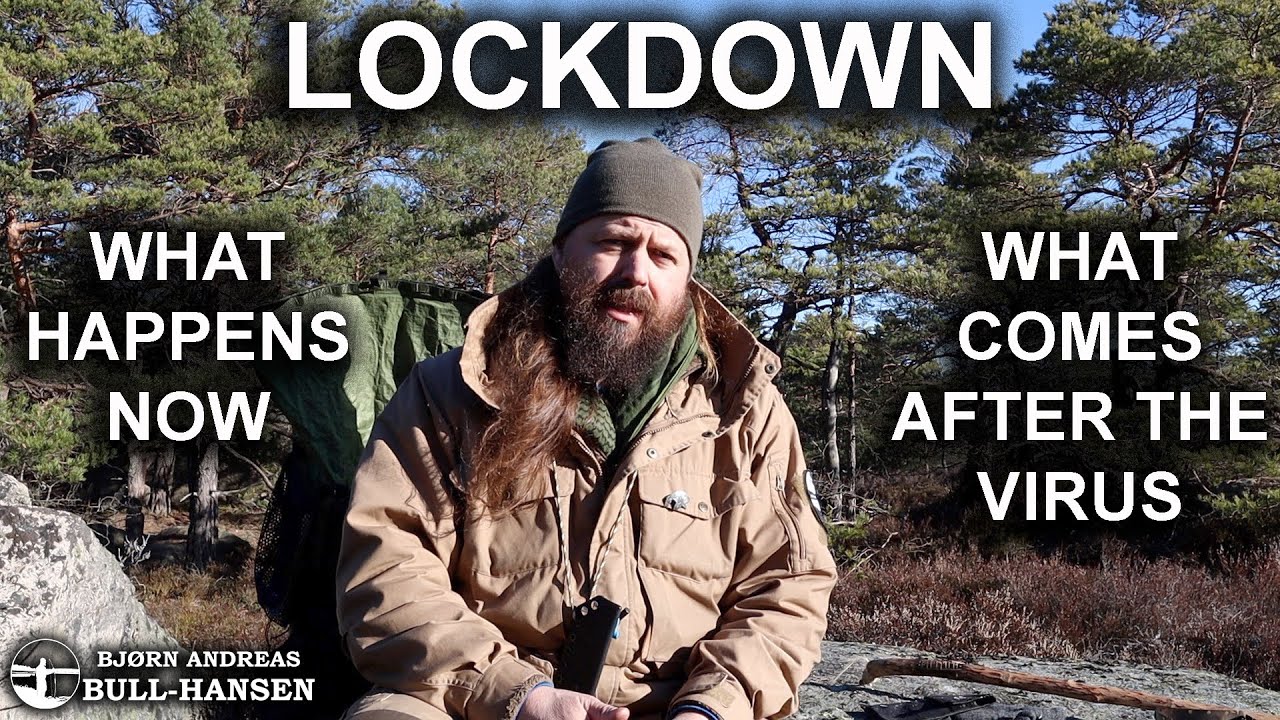
Bjørn Andreas Bull-Hansen, the Norwegian historical novelist and bushcraft creator better known to his YouTube subscribers for wilderness survival content, turned his camera on a different kind of survival question in mid-March 2020. In “Coronavirus and Covid-19: What happens now, what comes next,” he lays out a blunt, unofficial read on the crisis just days after the World Health Organization declared COVID-19 a global pandemic on March 11, 2020. There’s no lab coat, no podium, no press release — just a man talking directly to his audience about what he thinks is coming.
- The video was recorded and published within days of the WHO’s March 11, 2020 pandemic declaration, as national lockdowns, border closures, and business shutdowns swept across Europe and North America.
- Bull-Hansen argues that shutting down entire countries and confining populations indoors will trigger a severe economic recession, not just a temporary public-health pause.
- He frames the crisis through preparedness and self-reliance rather than clinical guidance, explicitly questioning how well institutions are managing the response.
The Moment He’s Reacting To
By the time Bull-Hansen sat down to record, the pandemic had stopped being an abstraction. Italy was under a national lockdown, Spain and France were closing in on the same, and the United States and Canada were beginning to shut borders and cancel large gatherings within days of each other. Businesses were sending employees home, schools were closing on rolling announcements, and the stock market had already logged some of its worst single-day drops in over a decade. That’s the backdrop for his monologue — not a hypothetical outbreak, but a rapid, visible unraveling of daily routine happening in real time on the news he and his viewers were both watching.
He doesn’t spend time relitigating the virology or case counts that dominated network coverage. Instead, he treats the pandemic response itself — the shutdowns, the border closures, the emergency orders — as the real story, arguing those measures will reshape economies and communities long after the initial outbreak curve flattens.
Recession as the Central Warning
The core of Bull-Hansen’s argument is economic, not epidemiological. He tells viewers that closing entire countries and forcing populations indoors is not a cost-free public-health maneuver — it is, in his view, the ignition point for a severe recession that will outlast the virus itself. That’s a notably different emphasis than the institutional messaging of the moment, which was largely focused on flattening the curve and hospital capacity rather than the shockwaves rippling through small businesses, supply chains, and household income.
The world before this is already gone — what comes next is a different kind of survival.
That framing puts him closer in spirit to the wave of commentary questioning government economic response than to public-health broadcasters. Readers following the broader pandemic fallout can see similar economic anxiety echoed in coverage like several states imposing stricter coronavirus restrictions as infections continue to spike, where shutdown orders and business closures became the dominant storyline well beyond the initial health emergency.
Preparedness Over Panic
Given his background as a bushcraft instructor and survivalist author, it’s no surprise Bull-Hansen leans into self-reliance as the antidote to the chaos he sees unfolding. He tells viewers to prepare practically and mentally for a prolonged period of disruption — stocking essentials, adjusting expectations, and psychologically bracing for a “new normal” rather than waiting for a quick return to pre-outbreak life. It’s advice rooted less in epidemiology and more in the preparedness ethos that runs through his other content.
He also voices skepticism about how well governments and institutions are managing the unfolding crisis, arguing that individuals shouldn’t assume authorities have the situation fully under control. That distrust of top-down crisis management became a recurring theme across independent commentary in this period, paralleling the kind of institutional pushback later documented in reporting such as new coronavirus model predicts jump in death toll, where shifting projections fed public uncertainty about official guidance.
A Different Kind of Pandemic Commentary
What separates Bull-Hansen’s video from network segments or government briefings airing the same week is tone. There’s no data dashboard, no epidemiologist guest, no talking points about mask supply chains. It’s a single creator, speaking plainly to camera, telling his audience that the pre-pandemic world is finished and that the response — not just the virus — is what will define the months ahead.
Whether or not viewers agreed with his recession forecast, the video captured a specific mood of mid-March 2020: the moment ordinary people, not just governments, started openly reckoning with how long this might last and what it would cost. That’s the conversation Bull-Hansen wanted his subscribers to start having before the lockdown orders even finished rolling out across their own countries.

How Amazon Paid $0 Federal Income Tax in 2018
Congresswoman Alexandria Ocasio-Cortez Demands Impeachment of Supreme Court Justice Clarence Thomas
Zaandam cruise ship stranded at sea with two coronavirus cases
Sen. Klobuchar On Election Security Legislation, Taking On Trump At Debates
Boris Johnson admitted to U.K. hospital with ‘persistent’ COVID-19 symptoms