

 InfoSearched
A Manhattan jury just delivered the first criminal conviction of the #MeToo era’s most notorious figure.
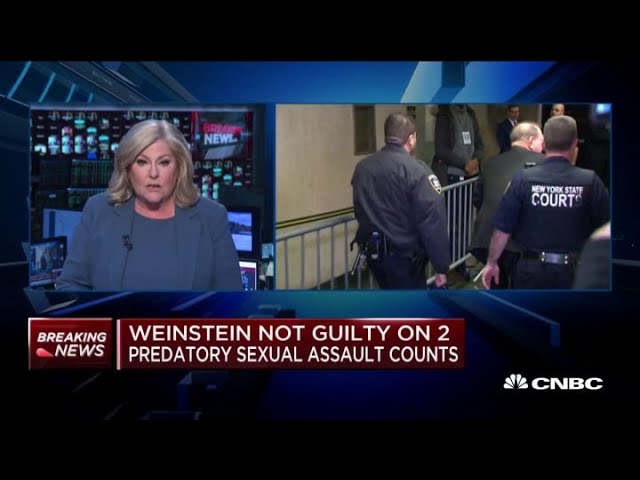
Harvey Weinstein, the once-untouchable Hollywood producer, was found guilty on two of five counts in his sex crimes trial on the morning of February 24, 2020. The verdict, reached after five days and more than 16 hours of deliberation, split the difference between the prosecution’s broadest claims and the defense’s full acquittal request — convicting Weinstein of serious felonies while clearing him of the charges that could have put him away for life. Judge James Burke wasted no time on the aftermath: he remanded the 67-year-old directly into custody, rejecting his lawyers’ bid for house arrest.
- Weinstein, 67, was convicted of first-degree criminal sexual act for forcing oral sex on former production assistant Miriam “Mimi” Haleyi at his Manhattan apartment in July 2006, and third-degree rape of aspiring actress Jessica Mann in a Manhattan hotel room in March 2013.
- He was acquitted of the two predatory sexual assault counts — which carried a potential life sentence — and first-degree rape; those charges rested heavily on Annabella Sciorra’s testimony that Weinstein violently raped her in the mid-1990s.
- Weinstein faces up to 25 years in prison on the criminal sexual act count and up to four years on the third-degree rape count, with sentencing set for March 11, 2020.
The Verdict, Count By Count
The New York State Supreme Court jury — seven men, five women — worked through a case built on the testimony of six accusers over six weeks of trial. Prosecutors argued Weinstein used his Miramax and Weinstein Co. power to trap women in one-on-one meetings and then assault them, betting his industry standing would keep them silent. Jurors bought that argument on the Haleyi and Mann counts but stopped short of the predatory assault charges, which required proof of a pattern going back to the Sciorra allegation from roughly 1993 or 1994. Deliberations had reportedly stalled on those predatory counts before the panel settled on the split verdict.
Defense Arguments and Strategic Failures
Defense attorneys Donna Rotunno and Damon Cheronis spent the trial trying to reframe the encounters as consensual relationships that continued, in some cases, after the alleged assaults. They leaned hard on inconsistencies in Haleyi’s account to undercut her credibility. That strategy chipped away enough to sink the predatory assault and first-degree rape charges, but it wasn’t enough to stop convictions on the two counts jurors found most convincing. Rotunno and Cheronis have already said they’ll appeal, pointing to what they call prejudicial media coverage and raising medical concerns about their client.
“Rape is rape whether it’s committed by a stranger in a dark alley or a domestic partner in a working relationship.”
Vance’s Message and the #MeToo Reckoning
Manhattan District Attorney Cyrus Vance Jr. delivered that line after the verdict, framing the conviction as validation for accusers whose stories don’t fit the stranger-in-an-alley template. It’s the first criminal conviction tied to the figure whose 2017 exposure by dozens of accusers set off the modern #MeToo movement, and it lands alongside a string of other high-profile sexual misconduct cases that have kept the Manhattan courts and the Epstein-adjacent investigations in the headlines — including the ongoing fallout for Weinstein associates named in unsealed court documents. The Weinstein case has moved in parallel with related legal drama involving figures like Jeffrey Epstein’s longtime associate, whose arrest kept the broader conversation about powerful men and sexual abuse allegations in the news throughout 2019 and into 2020.
Anticipated Next Steps in Proceedings
Weinstein is being held without bail after the verdict, and his legal team is already signaling an appeal built around jury bias and the volume of media coverage surrounding the trial. He also still faces a separate criminal case in Los Angeles tied to additional accusers, meaning the March 11 sentencing in New York won’t be the last courtroom Weinstein sees this year. Whether the maximum 25-year term for the criminal sexual act count gets imposed will say a lot about how far the New York court wants to go on a defendant who walked out of six accusers’ testimony convicted on exactly two.






Candace Owens EXPLODES On Nancy Pelosi, Gets A Standing Ovation
New report indicates China misled world about coronavirus
The future of the American mall
Jesse on new Hunter Biden scandal: Laptop ‘from hell’ could bring down Biden
In November 2020 It All Comes Together: Riots, Coronavirus, Covid-19, Trump Biden, Social Unrest