

 InfoSearched
The planet got a strange gift from a pandemic — clear skies over cities that hadn’t seen them in decades.
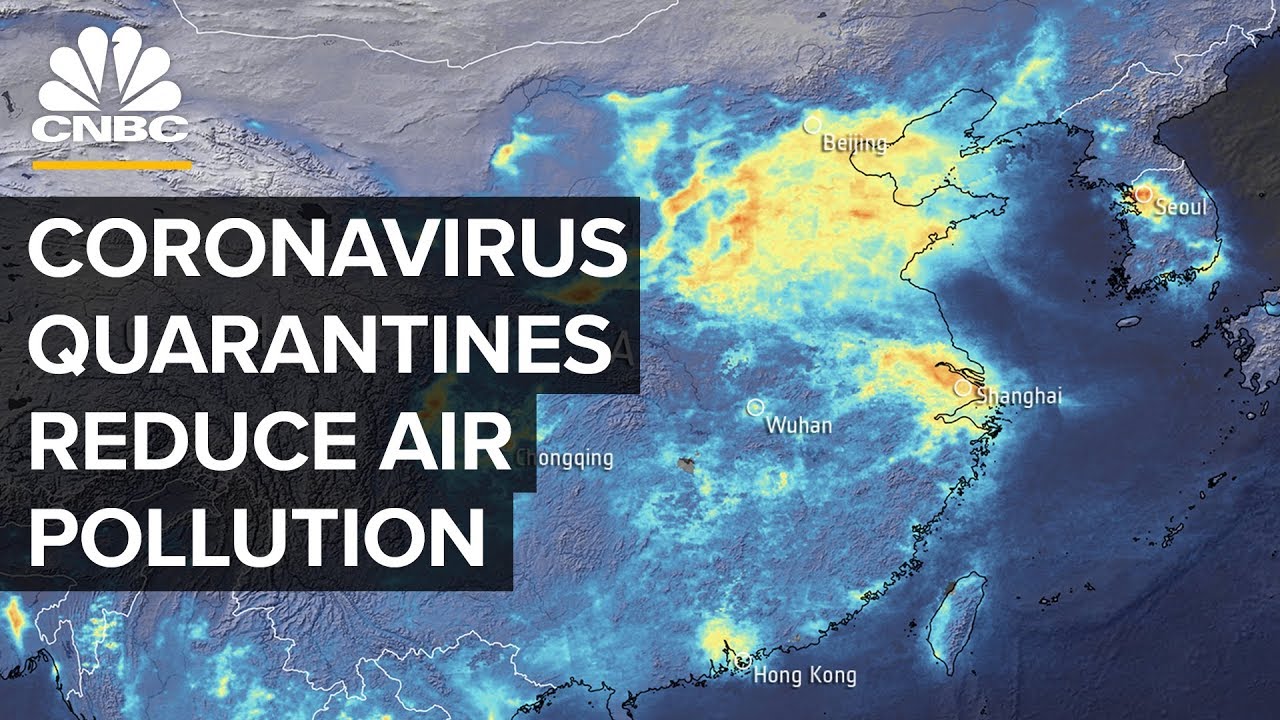
As COVID-19 spread across the globe in early 2020, the lockdowns meant to slow the virus did something almost no environmental policy ever managed: they emptied highways, grounded flights, and idled factories fast enough for satellites to see the change from orbit. Nitrogen dioxide readings over China, then Italy, then major U.S. cities fell off a cliff within weeks. Scientists at NASA and the European Space Agency say they’ve never watched a drop like this happen so quickly, over such a wide area.
- NASA and ESA satellite sensors recorded nitrogen dioxide levels over central and eastern China falling 10% to 30% below the 2005–2019 average following the January 23, 2020 lockdown of Wuhan and Hubei province.
- NASA researcher Fei Liu said it’s “the first time I have seen such a dramatic drop-off over such a wide area for a specific event,” noting the decline lasted longer than the usual Lunar New Year factory slowdown and never rebounded afterward.
- Stanford economist Marshall Burke estimated the cleaner air from China’s shutdown likely prevented tens of thousands of premature deaths from respiratory and cardiovascular disease — more than the outbreak’s early death toll.
Satellite Imagery Reveals New Findings
The data came from two instruments built specifically to track this kind of gas: the Tropospheric Monitoring Instrument, or TROPOMI, aboard the European Sentinel-5P satellite, and the Ozone Monitoring Instrument, or OMI, on NASA’s Aura satellite. Both track nitrogen dioxide, a gas pumped out mainly by car engines, coal-fired power plants, and heavy industry. It’s not just a pollutant on its own — it’s also a marker for how much fossil fuel is actually being burned in a given region at a given time.
China offered the clearest before-and-after. Every year, NO2 dips during Lunar New Year as factories close for the holiday, then climbs right back once workers return. This time it didn’t. The readings stayed low well past the holiday window, which is exactly what tipped off researchers that something bigger than a seasonal closure was happening — an entire province, then an entire country, grinding its economy to a near-halt.
The Human Cost Behind the Clean Air
Marshall Burke’s analysis at Stanford put a grim number on the silver lining. By his estimate, the reduction in fine-particle pollution tied to China’s shutdown likely spared tens of thousands of people from early death by heart and lung disease — a toll that, at least in that narrow window, outpaced the coronavirus’s own body count in the region. It’s the kind of statistic that only shows up because pollution kills quietly and constantly, year-round, while an outbreak makes headlines.
“This is the first time I have seen such a dramatic drop-off over such a wide area for a specific event.” — NASA researcher Fei Liu
Europe and the U.S. Follow the Same Pattern
As the virus moved west, so did the pollution drop. Northern Italy — the epicenter of Europe’s outbreak — saw sharp NO2 declines over Milan once regional lockdowns hit in March. Ground sensors and satellite readings picked up the same trend across Western Europe and in U.S. corridors including Los Angeles, where both nitrogen dioxide and fine particulate matter, PM2.5, fell as commuters stopped commuting almost overnight. The country was in the middle of a wave of new stay-at-home mandates as more states moved to lock things down.
Environmental scientists were quick to draw the line between empty freeways and cleaner air, but just as quick to add the caveat: this isn’t a fix, it’s a pause. The unusual quiet over cities like Beijing, where the capital briefly resembled a ghost town, was a byproduct of economic paralysis, not policy — and paralysis doesn’t last.
A Temporary Reprieve
Nobody studying the data was calling this a long-term environmental win. The consensus among the researchers cited by NASA and ESA was that emissions would snap back toward normal the moment factories restarted and highways refilled — which is exactly what happened after China’s Lunar New Year closures in years past, just on a much larger scale this time. The clean-air readings are a snapshot of an economy on pause, not a preview of what’s coming next.
What happens next depends entirely on how long the shutdowns hold. China’s own factories were already easing back toward full output by late March even as Hubei’s initial lockdown wound down, and the early readings out of Wuhan’s reopened industrial zones were the first real test of whether that NO2 drop was a blip or a preview of a slower global rebound.






Why China Will be the Big Winner of the 2020 Crisis
China to Lift Lockdown on Coronavirus Epicenter
How San Francisco Has Kept Its Coronavirus Numbers Low
US-born high school student detained for weeks by CBP
CDC Pulls Down Guidance On Airborne Covid Spread