

Swarm Of Locusts Threaten Livelihood Of Millions In African, Asian And Middle Eastern Countries
 InfoSearched
A biblical-scale insect invasion is colliding with a global pandemic, and millions of livelihoods are caught in the middle.
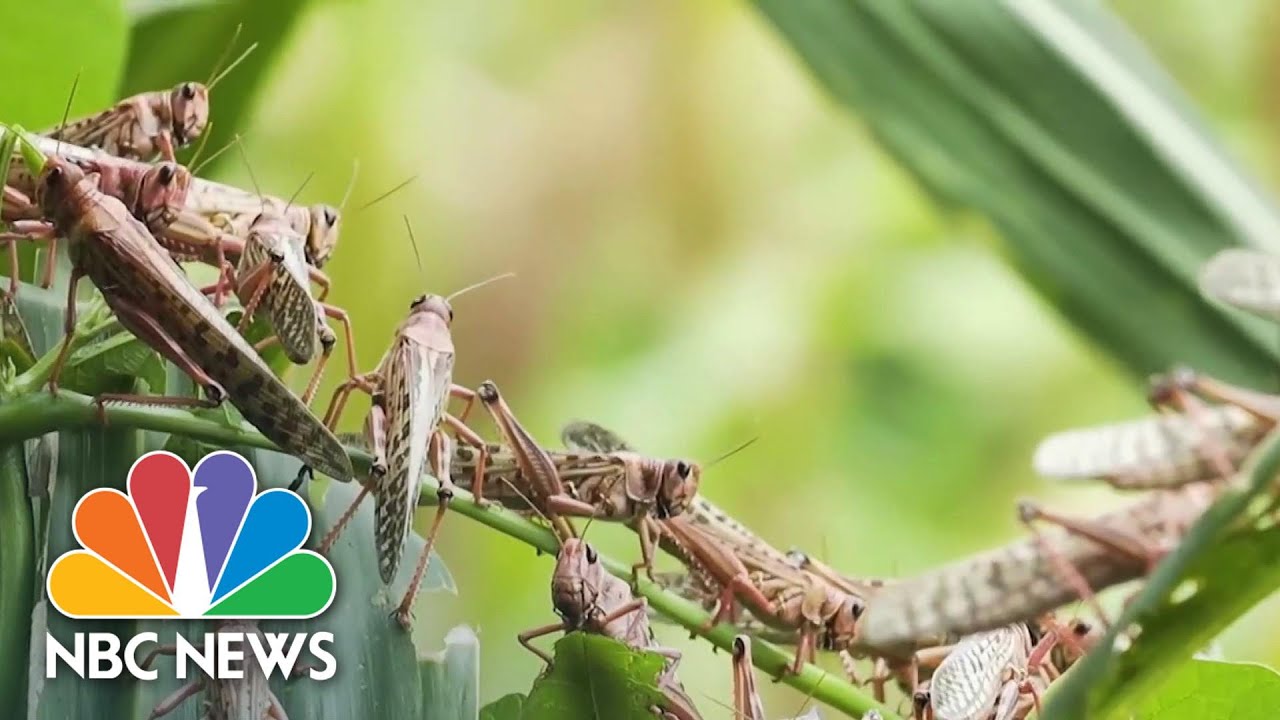
Desert locust swarms are ripping across East Africa, the Middle East, and South Asia in numbers not seen in a generation, stripping cropland and grazing pasture just as the countries in their path try to manage COVID-19 outbreaks. NBC News correspondent Janis Mackey Frayer reported on the scale of the crisis, tracing it back to abnormal weather patterns and heavy rainfall tied to cyclones in 2018 and 2019 that gave desert locust populations the perfect conditions to multiply several thousandfold. The result is the worst outbreak Ethiopia and Somalia have seen in 25 years, and the worst Kenya has faced in more than 70.
- The outbreak is the worst in Ethiopia and Somalia in 25 years and the worst in Kenya in over 70 years, with swarms also spreading into India and Pakistan.
- A single moderate swarm of 40 million locusts can eat as much food in a day as 35,000 people — a direct hit on cash crops like maize, wheat, and vegetables, plus the pastoral rangelands livestock depend on.
- COVID-19 travel restrictions, grounded flights, and closed borders have disrupted supply chains for pesticides, field personnel, and aircraft needed to spray swarms before new breeding cycles hatch.
Rapid Expansion of the Swarms
Desert locusts are normally solitary insects, but under the right conditions they shift into dense, migratory swarms that can travel over 90 miles in a single day. The cyclones that battered the Arabian Peninsula in 2018 and 2019 dumped unusually heavy rain into remote desert regions, creating soil moisture that locust eggs need to hatch en masse. What started as scattered breeding grounds in late 2019 turned into a chain reaction — generation after generation multiplying, until swarms numbering in the billions were airborne across the Horn of Africa.
The Food and Agriculture Organization has designated the outbreak an unprecedented threat to food security and rural livelihoods, a label the agency doesn’t hand out lightly. In East Africa alone, roughly 12 million people were already living with acute food insecurity before the locusts arrived, meaning the swarms hit during a critical harvest window with almost no margin for error.
The Toll on Crops and Livestock
Farmers across Kenya, Somalia, and Ethiopia have watched entire fields of maize and sorghum stripped bare within hours. The damage isn’t confined to row crops — the swarms also devour the pastoral rangelands that pastoralist communities rely on to feed cattle, goats, and camels, meaning both the crop economy and the livestock economy are taking simultaneous hits.
A single moderate swarm of 40 million locusts can consume the same amount of food in one day as 35,000 people.
That single statistic explains why the FAO is treating this as a food-security emergency rather than a routine agricultural pest problem. Multiply that by the scores of swarms reported across East Africa, the Middle East, and South Asia, and the cumulative damage to harvests threatens to push already vulnerable populations further into hunger.
Tracking and Fighting the Swarms
Control efforts run through the FAO’s Desert Locust Watch, which combines satellite surveillance with ground-level reporting devices called eLocust3 to map where swarms are breeding and moving. Aerial and ground spraying of pesticides remains the primary weapon against the insects, but it only works if crews can get to the right patch of desert before eggs hatch and hoppers take flight as a new swarm.
That’s exactly where COVID-19 has complicated matters. Grounded flights, shuttered borders, and disrupted international supply chains have slowed the delivery of pesticides, spray aircraft, and trained field personnel to the countries that need them most — the same kind of logistical gridlock that has hampered pandemic response efforts elsewhere, as seen in coverage of how COVID-19 case surges strained resources even in wealthier countries. For nations already short on aircraft and chemical stockpiles, the delays give locust populations extra breeding cycles to expand before spray teams can respond.
A Widening Geographic Footprint
The swarms haven’t stayed contained to the Horn of Africa. They’ve pushed into Yemen, crossed into Saudi Arabia, and moved on into Pakistan and India, adding new fronts to what was already a stretched response effort. India, which has been managing its own severe COVID-19 caseload — a strain documented in reporting on the pandemic’s toll on rural communities there — now has to divert agricultural resources toward locust containment in several northern and western states.
The geographic spread matters because it multiplies the number of governments that need pesticide stockpiles, spray aircraft, and coordination with the FAO all at once, at a moment when international shipping and travel are running at reduced capacity.
The FAO’s own modeling has warned that without sustained spraying through the current breeding season, locust numbers could keep climbing before the fall harvest in East Africa — the exact window millions of farming and herding families depend on most.








President Trump extends coronavirus guidelines until April 30th
Head Of Laboratory In China Denies Coronavirus Originated There
Trump authorizes arrests of anyone vandalizing monuments
Seattle Just PURGED The CHAZ After Chazistani Police Kill Underage Black Male, Truly Stupid Times
Tucker torches California for providing free alcohol, nicotine to homeless