

 InfoSearched
In India’s villages, the second Covid wave killed people who were never even tested for it.
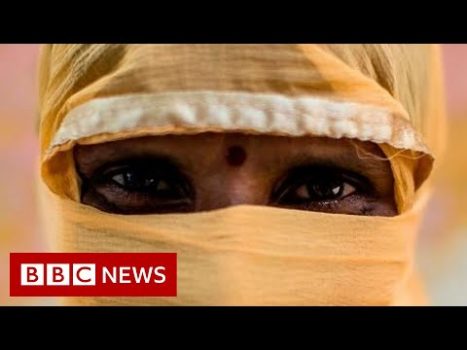
By the time the Delta-driven second wave tore through India in April and May 2021, the images out of Delhi and Mumbai — gasping patients outside hospitals, oxygen cylinders changing hands for thousands of rupees — had already defined the crisis for the outside world. But BBC News found the real scale of the disaster wasn’t in the cities at all. It was in the villages, where more than 60% of India’s 1.4 billion people live, and where the virus killed on a scale that official records barely register.
- Rural patients across states like Uttar Pradesh died of Covid-like symptoms without ever receiving a diagnostic test, with local officials frequently logging the cause of death as “unknown,” “mysterious fever,” or a pre-existing comorbidity instead of coronavirus.
- The Indian Express found Uttar Pradesh’s official Covid death toll stood at 22,419, while the actual figure may be closer to 1.4 lakh (140,000) — a gap of roughly 626%.
- Village clusters reported dozens of deaths within weeks of the April panchayat elections, a known super-spreader event, while overwhelmed crematoriums and riverbank burial grounds along the Ganges led to mass burials and bodies floating downriver.
Discrepancies in Recorded Casualty Figures
The mechanics of the undercount are simple and brutal. Testing kits and RT-PCR facilities barely existed outside district towns, and the primary health centers that were supposed to serve rural populations were either shut, unstaffed, or swamped. With no test result, there is no Covid death certificate — and without a death certificate, a fatality gets folded into vague categories like “natural causes” or a chronic illness the person happened to have.
Fear did the rest. Many rural residents avoided government hospitals entirely, associating them with isolation wards and, in some cases, with not coming back. Instead, families turned to unregistered local practitioners — widely known as “quacks” — for treatment that had no chance of managing a severe Covid case. The result was that most deaths happened at home, far outside the formal civil registration and medical certification system that feeds India’s official pandemic statistics.
The Panchayat Elections and the Super-Spreader Effect
India held panchayat, or local council, elections in April 2021 even as the second wave was accelerating — polling stations, campaign gatherings, and vote counting all brought large numbers of rural residents into close contact at the worst possible moment. BBC News documented villages where dozens of deaths followed within weeks of the vote, a pattern epidemiologists pointed to as a clear driver of rural transmission that never showed up as an official outbreak.
The official Covid death toll for Uttar Pradesh was 22,419. The real number may be closer to 140,000.
Overwhelmed Crematoriums and Bodies on the Ganges
Crematoriums and traditional burial grounds along rural riverbanks couldn’t keep pace with the volume of dead. That backlog produced some of the most haunting footage of the entire pandemic: mass burials dug into riverbanks and bodies drifting down the Ganges, images that made clear no government tally could be capturing what was actually happening on the ground.
Excess Mortality Tells a Different Story
Health economists and epidemiologists tracking the crisis by early June 2021 concluded that excess mortality data — comparing overall deaths against historical averages, rather than relying on confirmed Covid diagnoses — showed the real rural death toll running several multiples higher than what India’s national statistics reported. That gap sat alongside broader concern about how infection rates kept climbing across India and Latin America even as vaccination campaigns struggled to reach rural populations, and it echoed warnings elsewhere about how a more transmissible variant, much like the one puzzling health authorities in Australia, could outrun the data meant to track it.
None of that showed up in a press briefing or a case-count graphic. It showed up in villages where the local vaccinator never arrived, the nearest working test kit was an hour’s drive away, and the family burying a relative had no piece of paper anywhere that said the word “Covid.”



Netanyahu Ousted After 12 Years As Israel’s Prime Minister
U.S. envoy talks Venezuela crisis ahead of international meeting
US sees 40,000 new COVID-19 cases in 1 day
Inside Connecticut’s Coronavirus-Only Facility For Nursing Home Residents
Global Coronavirus Impact: Italy’s Hospitals Strained, Merkel In Quarantine