

 InfoSearched
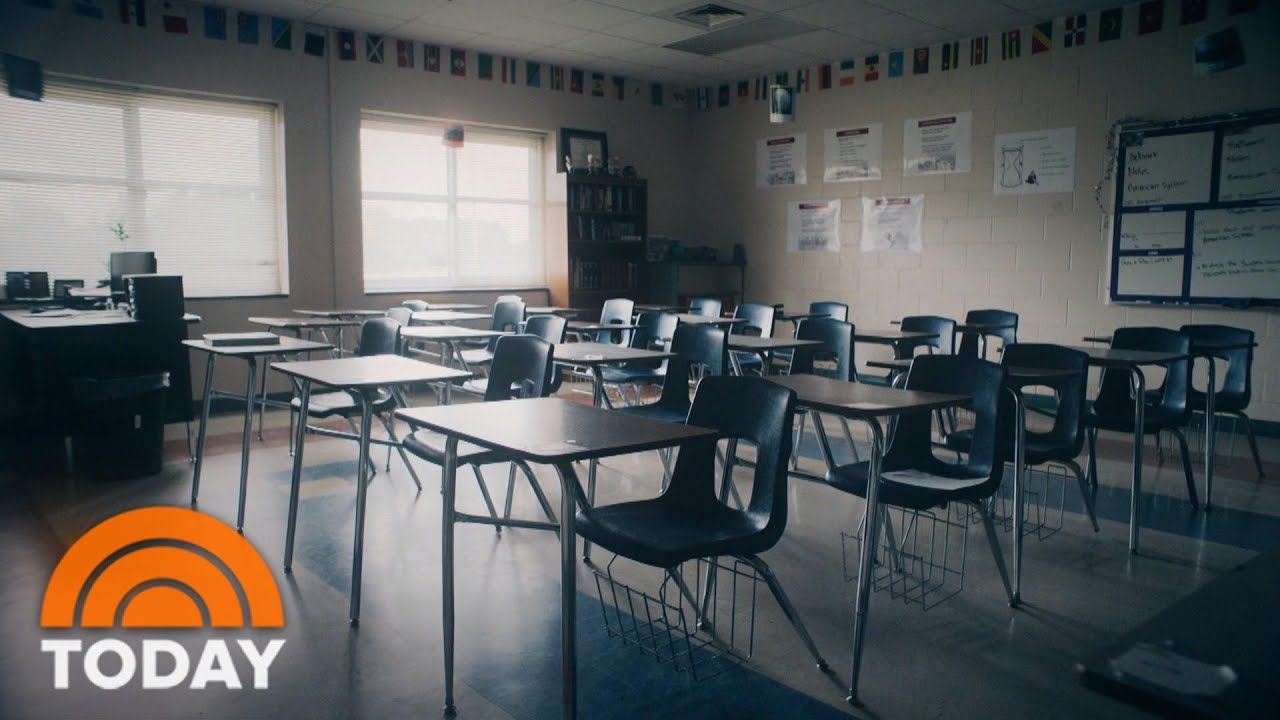
Fall is weeks away, and no district has a clean answer for how to open a classroom safely.
With the new school year bearing down and COVID-19 case counts climbing across much of the country, superintendents, teachers and parents are stuck trying to solve a problem nobody agrees on. NBC’s TODAY dug into the standoff: Washington wants kids back in seats, working parents need somewhere for their children to go, and teachers are asking whether any building can actually be made safe enough for that to happen.
- Districts are weighing three competing models — fully remote, fully in-person, and hybrid schedules that split students into cohorts on alternating days to cut down classroom density.
- Proposed safety protocols include mandatory masks, daily temperature checks, staggered arrival times, desks spaced apart, and frequent hand-washing breaks.
- Some districts in Europe and Asia already reopened using strict cohorting and testing, but American teachers are pressing school boards on ventilation, funding and quarantine plans before committing to the same approach.
The Push to Reopen
The pressure to get kids physically back in classrooms is coming from multiple directions at once. Federal officials have leaned on schools to resume normal operations, arguing that prolonged closures set students back academically and leave working parents with no childcare options. That case has only gotten louder as districts finalize fall calendars and families realize remote learning last spring left plenty of gaps.
For families without reliable broadband or a parent able to supervise a laptop all day, in-person school isn’t optional — it’s the only path that keeps kids from falling further behind. That reality is colliding directly with case counts that, as the U.S. surges past 3.1 million confirmed cases, keep climbing in exactly the states now trying to write reopening plans.
Teachers Push Back
On the other side of the debate are teachers and public health experts warning that packing students into enclosed classrooms is a recipe for spread, given what’s understood about the virus traveling through indoor air. Unions have zeroed in on older and at-risk staff, questioning whether any protocol short of a redesigned building can actually protect them for a full school day, five days a week.
Teachers say the real question isn’t whether masks and desk spacing help — it’s whether districts have the money, the ventilation and the room to make any of it hold up in practice.
That skepticism lines up with broader public alarm about how the virus moves through indoor spaces, an issue that’s dogged reopening plans well beyond schools, as seen in the CDC’s own shifting guidance on airborne spread.
Models on the Table
No single format has emerged as the default. Fully remote instruction avoids the transmission risk entirely but reopens the childcare and learning-gap problems that pushed districts toward reopening in the first place. Fully in-person classes restore normal instruction but demand the most from buildings that, in many districts, weren’t designed with pandemic-era spacing in mind. Hybrid schedules — rotating cohorts through the building on different days — are the middle path most districts are leaning toward, splitting the difference between density and disruption.
Districts abroad in parts of Europe and Asia have already run this experiment with strict cohorting, frequent testing and smaller group sizes, offering a rough playbook. But American teachers and administrators say those systems came with resources and testing capacity that many U.S. districts simply don’t have lined up yet.
The Funding and Space Problem
Underneath every model is the same blunt issue: money and square footage. Desk distancing only works if there’s room to spread desks out. Staggered arrivals and smaller cohorts only work if there’s enough staff to supervise them. Quarantine protocols only work if a district has a plan — and a budget — for what happens when a single positive test forces an entire cohort home. Those are the questions school boards nationwide are wrestling with right now, a debate playing out in real time as districts try to finalize plans before the first bell rings.
None of that gets resolved by Labor Day on its own — districts are still finalizing which model they’ll run, and a lot of that decision comes down to whatever the local case curve looks like the week before classes are supposed to start.








President Trump Says He Did Not Discuss Election Interference With Putin | Velshi & Ruhle | MSNBC
Health care workers say they’ve been told to keep silent on hazardous conditions
New Trump WH Press Secy. Kayleigh McEnany Says She Won’t Lie From Podium
Passengers subdue off-duty flight attendant making threats near cockpit
World leaders meet in Vienna to salvage Iran nuclear deal