

 InfoSearched
The Fed just cut rates for the first time since the financial crisis, and Wall Street wanted to know if that meant trouble was coming.
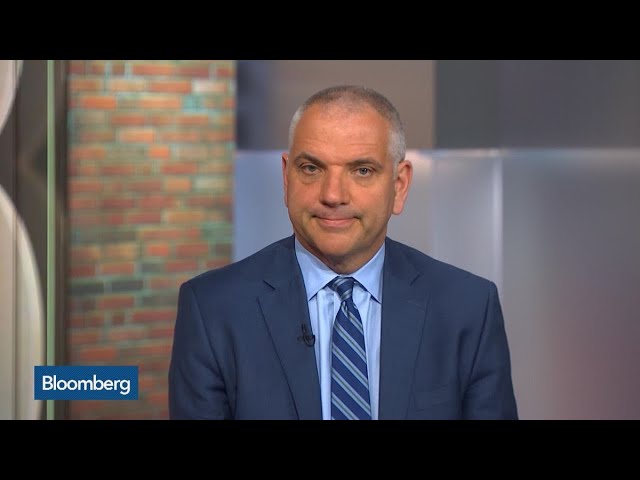
Mike Swell, co-head of global fixed income portfolio management at Goldman Sachs Asset Management, sat down with Bloomberg Television on July 31, 2019, to push back on the gloomiest reads of the U.S. economy. His message was blunt: the “rollover” chatter dominating trading desks was overdone, and the underlying numbers still told a stable story. He delivered that view on the same day the Federal Reserve made its first rate cut in over a decade.
- The Federal Reserve cut its benchmark rate by 25 basis points on July 31, 2019 — its first reduction since the 2008 financial crisis.
- Swell argued the U.S. economy remains “fine” and dismissed widespread fears of an imminent downturn as overstated.
- The cut landed amid escalating trade tensions with China and mixed corporate earnings, even as consumer spending and employment held steady.
A Rate Cut With No Playbook
The Fed’s decision to trim rates by a quarter point marked a genuine inflection point — the central bank hadn’t reversed course like this since the depths of the crisis more than ten years earlier. Traders had spent weeks debating whether Chairman Jerome Powell’s Fed was making an insurance move against slowing global growth or reacting to something worse brewing beneath the surface. Swell’s appearance on Bloomberg came directly into that debate, and he came down firmly on the “insurance” side of it.
He pointed to the labor market and consumer activity as the parts of the economy doing the heavy lifting. Employment and household spending were holding up even as manufacturing data and business investment softened under the weight of tariff uncertainty. For Swell, that split between a resilient consumer and a shakier corporate sector wasn’t a five-alarm signal — it was the kind of mid-cycle wobble the Fed’s cut was designed to smooth over.
Rollover Risk Concerns Proved Unfounded
The term “rollover” had become shorthand on trading floors for a sharp economic turn — the kind of abrupt slowdown that shows up first in credit spreads and inverted yield curves before it ever hits a jobs report. Swell’s argument was that markets were pricing in that scenario well ahead of any confirming data.
The U.S. economy is fine, and rollover concerns are overdone.
That framing mattered because it wasn’t coming from a talking head with no skin in the game — GSAM manages fixed income portfolios where positioning decisions hinge on exactly this call. If Swell and his desk believed a recession were close, their book would have looked very different heading into the back half of 2019.
Trade War as the Real Wildcard
Where Swell did allow for genuine risk was the ongoing trade fight with China. Tariff threats and retaliatory measures had already rattled corporate guidance throughout earnings season, and that uncertainty was doing more damage to sentiment than the actual economic data. The Trump administration’s broader trade posture that summer — which had also included moves like ending preferential treatment tied to trade policy — kept investors bracing for headline risk that could move faster than any single Fed decision.
Swell’s read was that the trade dispute represented a policy-driven risk rather than a structural economic weakness — meaning it could be resolved or escalated on political timing rather than reflecting deep cracks in demand or credit. That distinction is exactly why he treated the rate cut as precautionary rather than a warning shot. For a deeper look at how these dynamics played into broader market moves that year, the Economics coverage from that period tracked the same tension between trade headlines and steady domestic fundamentals.
None of that meant Swell was waving off risk entirely. He flagged the trade dispute and slowing global growth as the things actually worth watching, not the domestic numbers everyone kept staring at. The next test was already on the calendar — trade talks and tariff deadlines with Beijing were set to keep dictating headlines through the fall, and that, more than any GDP print, was what was going to decide whether the Fed’s July cut turned out to be a one-and-done or the first of several.



66% of N.Y. coronavirus hospitalizations are people who stayed home
Fauci calls White House attacks on him ‘bizarre’
18 People Contract COVID-19 After 30th Birthday Party
White House directs staff to wear masks after officials contract coronavirus
Fixated Trump Is Still Trying To Overturn The 2020 Election