

 InfoSearched
Missouri just became the first U.S. state to take China to federal court over COVID-19.
Missouri Attorney General Eric Schmitt filed a civil lawsuit on April 21 against the People’s Republic of China, the Chinese Communist Party, and several state ministries and local officials, accusing them of an “appalling campaign of deceit, concealment, misfeasance, and inaction” during the earliest weeks of the outbreak in Wuhan. It’s the first such suit brought by a U.S. state government, and it lands as Missouri’s own case count climbs and its economy absorbs the shutdown fallout.
- Schmitt’s office filed the complaint in the U.S. District Court for the Eastern District of Missouri, naming China, the CCP, and other state ministries and local officials as defendants.
- The lawsuit rests on four causes of action: public nuisance, engagement in abnormally dangerous activities, breach of duty regarding virus transmission, and breach of duty regarding PPE hoarding.
- At the time of filing, Missouri had recorded more than 5,800 confirmed COVID-19 cases and at least 177 deaths.
The Case Missouri Is Making
The complaint argues that Chinese authorities knew about human-to-human transmission far earlier than they admitted publicly, and instead of warning the world, they silenced doctors who tried to sound the alarm, destroyed early medical research samples, and let millions of travelers pass through Wuhan before locking the city down. Schmitt’s filing also alleges Beijing hoarded high-quality personal protective equipment for domestic use while continuing to export defective masks and other supplies abroad — a claim that forms the basis of one of the suit’s four counts.
Schmitt is seeking compensatory damages, civil penalties, restitution, punitive damages, and reimbursement for the state’s abatement costs tied to the pandemic response. “The Chinese government lied to the world about the danger and contagious nature of COVID-19, silenced whistleblowers, and did little to stop the spread of the disease,” Schmitt said, adding that the responsibility for the crisis “lies squarely at their feet.”
“They lied to the world about the danger and contagious nature of COVID-19, silenced whistleblowers, and did little to stop the spread of the disease. They must be held accountable for their actions.”
Wuhan’s Opening Weeks Under Scrutiny
The suit zeroes in on the December 2019-to-January 2020 window in Wuhan, the same stretch that produced the eerie footage of empty streets and shuttered markets that circulated worldwide as the outbreak first tightened its grip on Chinese cities. Missouri’s filing contends that instead of leveling with international health authorities during that period, local and national officials suppressed evidence of person-to-person spread while the virus was still containable at the source. That timeline has also fed broader debate in Washington over how research tied to Wuhan labs was funded and monitored, including scrutiny of U.S.-backed studies on bat-to-human transmission research in China.
The Legal Long Shot
Legal experts wasted no time flagging the suit’s biggest obstacle: the Foreign Sovereign Immunities Act, which generally bars civil lawsuits against foreign governments in U.S. courts outside a handful of narrow exceptions. Missouri will need to convince a federal judge that its claims — particularly the allegations tied to PPE exports and abnormally dangerous activity — fall within one of those carve-outs before the case can proceed past a motion to dismiss. That threshold question, not the underlying pandemic allegations, is likely to be the first real fight in the courtroom.
Beijing’s Rejection
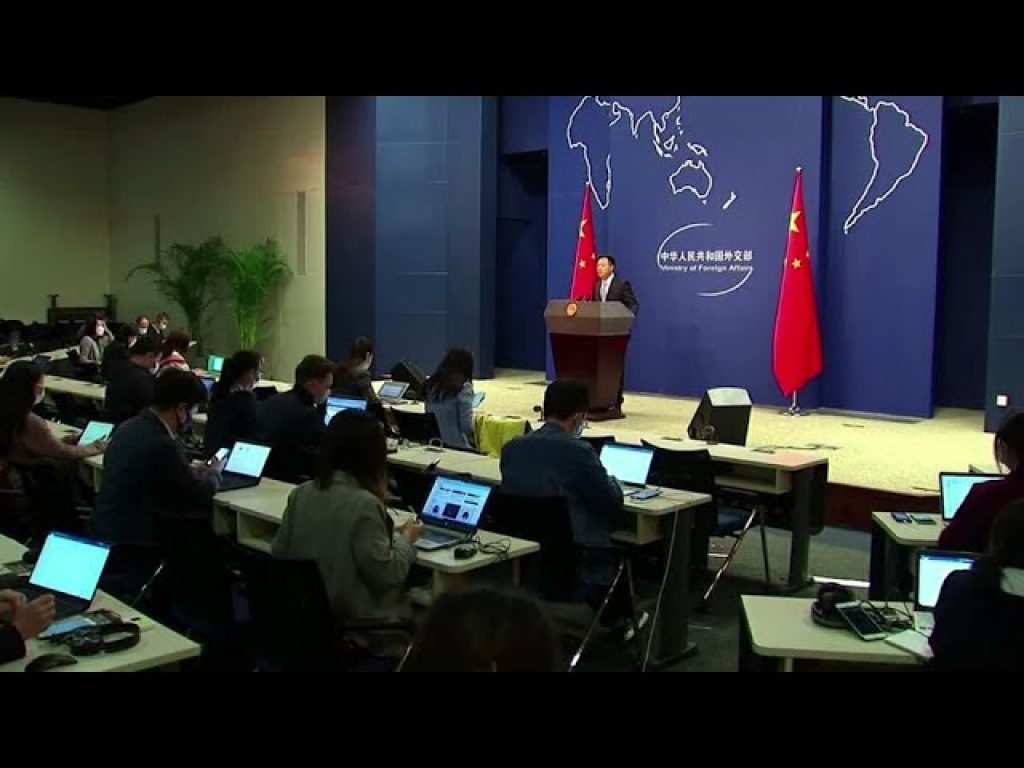
Chinese Foreign Ministry officials dismissed the lawsuit outright, saying it has no factual or legal basis and calling politically motivated pandemic litigation of this kind a malicious abuse of the legal process. The pushback mirrors Beijing’s broader posture toward Western criticism of its early outbreak response, a tension that has also shown up in trade and diplomatic friction documented in other flashpoints, including Washington’s move to end preferential treatment for Hong Kong.
Whether Schmitt’s office can clear the sovereign-immunity hurdle will determine if this case ever reaches discovery, where the PPE-hoarding allegations and Wuhan whistleblower claims would actually get tested with evidence. Until a federal judge rules on that threshold question, Missouri’s suit stands mostly as a marker — the first state to put its name on this argument in court, with the legal odds still stacked against it.

Hong Kong LegCo Member Ho: There’s No Attempt by China to Heal the Rift
US Democratic Battle: Presidential candidates debate again
Attorney speaks out after FBI arrests longtime Jeffrey Epstein associate
California Cannabis Businesses Fear State’s Legal Industry Could Collapse
“Shark Tank” judge Barbara Corcoran falls for $400,000 e-mail scam