

 InfoSearched
New York recorded its deadliest 24 hours of the pandemic on April 8 — and its top disease modelers say the worst may already be behind it.
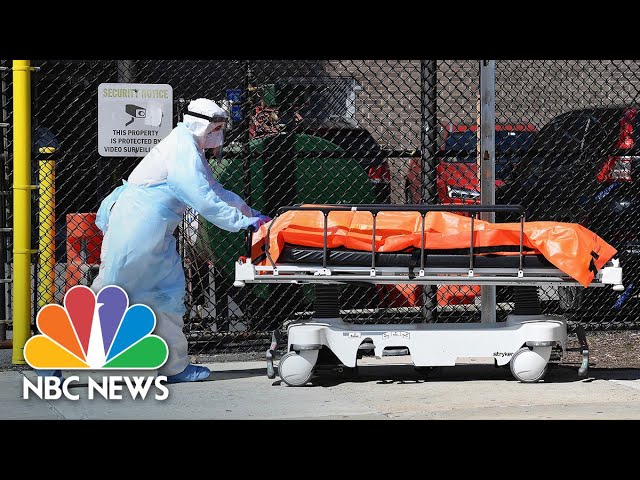
Governor Andrew Cuomo announced 779 coronavirus deaths in a single day, pushing the statewide toll past 6,200 and past the number of New Yorkers killed on September 11. He ordered state flags flown at half-staff. Yet in the same briefing, and in NBC Nightly News’ reporting that evening, a very different story was emerging in the hospital data: net hospitalizations, ICU admissions and intubations were all leveling off, suggesting weeks of social distancing were finally showing up in the numbers that matter most for tracking the outbreak’s trajectory.
- New York logged 779 COVID-19 deaths in 24 hours on April 8, its highest single-day total of the pandemic, bringing the statewide death toll above 6,200.
- The state’s death count has now surpassed the number of New Yorkers killed in the September 11 attacks, prompting Cuomo to order flags flown at half-staff.
- Despite the record death toll, net hospitalizations, ICU admissions and intubations all showed dramatic rate reductions, evidence the curve was flattening even as deaths climbed.
A Grim Record, But a Lagging One
Cuomo used his daily briefing to explain the disconnect between rising deaths and improving hospital metrics: deaths, he said, are a “lagging indicator.” The people dying on April 8 were largely infected weeks earlier, then spent extended stretches on mechanical ventilators — a group with notoriously low long-term survival odds once intubated. That timeline gap means the death curve can keep climbing even after the metrics that predict it, like new hospital admissions, have already turned over.
The Numbers Behind the Flattening
NBC Nightly News zeroed in on three leading indicators tracked daily by the state: net hospitalizations, ICU admissions and intubations. All three showed sharply reduced growth rates compared to the explosive increases seen in late March, the clearest early sign that New York’s stay-at-home order and business shutdowns were slowing transmission. It was these figures — not the death count — that state officials pointed to as evidence the mitigation strategy was working.
Deaths are a lagging indicator — reflecting patients infected weeks earlier who had spent extended time on ventilators, where long-term survival is low.
Questions Over the Early Response
Even as the hospital data improved, scrutiny intensified over whether Cuomo and New York City Mayor Bill de Blasio moved too slowly in early March, when the virus was already spreading quietly through the city before stay-at-home orders and business closures took effect. Officials defended the timeline, arguing that once mitigation measures were in place, public compliance had prevented the kind of catastrophic scenario modelers had warned about weeks earlier.
The Warning Against Easing Too Soon
Officials paired the encouraging hospitalization data with a blunt warning: the gains were fragile, and lifting restrictions prematurely could send the numbers right back up. That tension — a record death toll on one hand, a flattening curve on the other — framed nearly every question New York faced about when, or whether, to loosen the very measures credited with bending the curve in the first place.
Cuomo’s briefings had by this point become daily appointment viewing precisely because of that tension, and the state’s next moves on schools, non-essential businesses and the stay-at-home order were about to hinge entirely on whether those three leading indicators kept trending down through the following week.









New York doctors overwhelmed amid urgent need for ventilators
Breaking news: The famous film star Tom Hanks has the coronavirus
US launches cyber-attack on Iran amid escalating tensions
Coronavirus case on U.S. base in South Korea
Hong Kong LegCo Member Ho: There’s No Attempt by China to Heal the Rift