

 InfoSearched
President Trump wants the country back at work by Easter, even as the U.S. becomes the new epicenter of the pandemic.
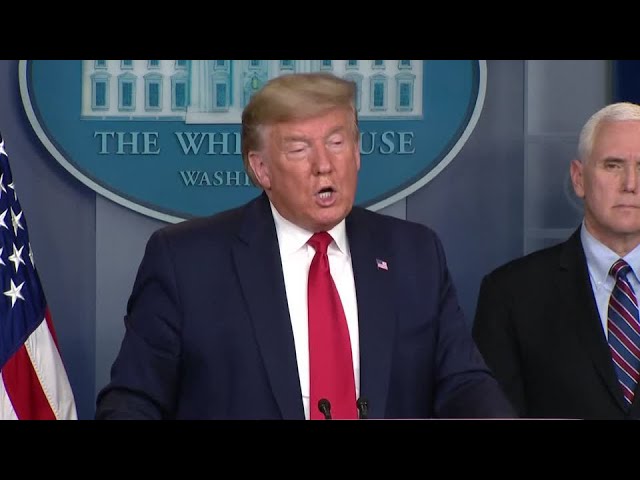
At a White House Coronavirus Task Force briefing on March 26, President Donald Trump said his administration is drawing up new federal guidelines that would sort American counties into high-risk, medium-risk and low-risk categories, giving governors a data-driven roadmap for deciding whether to loosen stay-at-home orders. “We have to get back to work,” Trump told reporters, repeating a line he first used two days earlier. The announcement landed on the same day the U.S. case count crossed 81,000, officially overtaking China and Italy as the country with the most confirmed infections in the world.
- U.S. coronavirus cases surpassed 81,000 on March 26, passing China and Italy for the highest national total, according to Reuters and Johns Hopkins tallies.
- The U.S. death toll climbed past 1,170 as Trump pushed a target of reopening businesses and lifting shutdowns nationwide by Easter Sunday, April 12.
- Trump sent a formal letter to state governors saying the new county-by-county risk classifications would be built on expanded testing data.
The Risk-Tiered Reopening Plan
The classification system Trump described would give county and state officials a framework for judging how aggressively to keep restrictions in place, based on local infection data rather than a blanket national approach. The idea, laid out in his letter to governors, is that counties with low case counts and adequate testing capacity could move toward normal activity sooner than hard-hit areas like New York City. Trump argued that broad swaths of the country — rural counties and small towns with few or no reported cases — were being shut down under the same rules as dense urban outbreaks, and said that mismatch was part of what the new guidelines were meant to fix.
A Grim Milestone
The reopening push came just as the outbreak numbers underlined how serious the U.S. situation had become. Confirmed infections crossed 81,000 on March 26, more than any other country, including China, where the virus was first identified, and Italy, which had been recording the world’s highest death tolls for weeks. The U.S. death count passed 1,170, according to running tallies compiled by Reuters and Johns Hopkins University. Similar to the debate playing out in other hard-hit states, the numbers set up a direct tension between Trump’s economic timeline and the trajectory of the outbreak itself — a tension that would soon show up in disputes over restrictions in states like Michigan, where residents were already chafing under Gov. Gretchen Whitmer’s stay-at-home order.
“We have to get back to work.”
The Easter Target and the Pushback
Trump had first floated the Easter Sunday deadline on March 24, and he kept pressing it in the March 26 briefing despite warnings from public health experts that lifting social distancing measures too early could reignite outbreaks that were only beginning to be brought under control in places like New York and Washington state. His argument was economic as much as medical: prolonged shutdowns, he said, would inflict damage on workers and businesses that could outlast the virus itself. That argument would keep colliding with rising case totals in the weeks that followed, a dynamic that later showed up in questions over whether the U.S. had, in fact, reopened faster than other countries battling the same outbreak.
Public health officials on the task force did not publicly commit to the April 12 date, and the guidance Trump described was still being drafted at the time of the briefing — meaning governors were left waiting on the testing-based risk maps he had promised in his letter, even as they weighed whether to tighten or loosen their own state orders in real time.






Harvey Weinstein guilty on 2 of 5 counts
USC to eliminate tuition for families making under $80,000
Bernie Sanders Says Path to Democratic Nomination Is Just Not There
Ghislaine Maxwell reportedly ready to name names
2 US soldiers killed in Iraq