

 InfoSearched
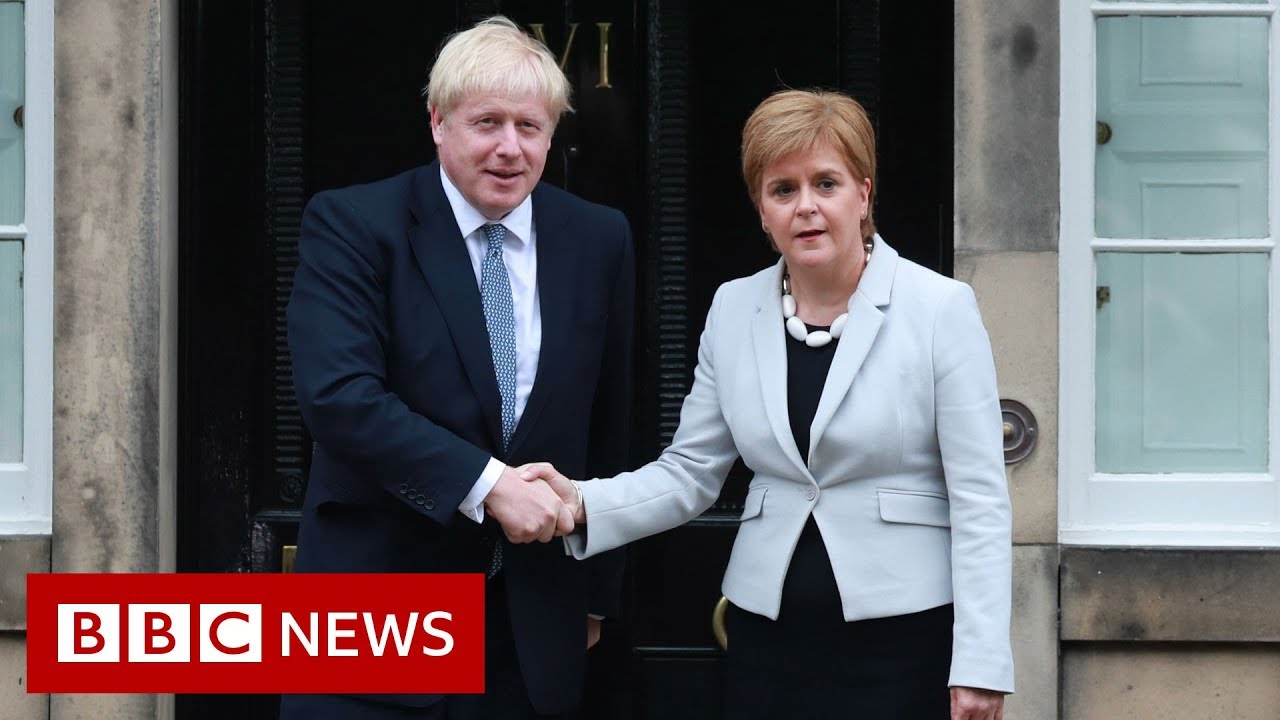
Boris Johnson’s first trip north of the border as Prime Minister blew up into a shouting match over whether he’s steering Britain toward a no-deal Brexit.
Just five days into the job, Johnson traveled to Scotland on July 29, 2019, and used a stop at the Faslane naval base on the Clyde to declare Theresa May’s Withdrawal Agreement “dead.” He insisted he remained “very confident” a new deal could still be struck with Brussels before the October 31 deadline — but repeated his line that the UK would leave “come what may” on that date, deal or no deal. By the time he reached Edinburgh, protesters were booing him at the door and Nicola Sturgeon was accusing him of playing a dangerous game.
- Johnson called May’s Withdrawal Agreement “dead” and vowed the UK leaves the EU on October 31 “come what may,” even without a new deal in place.
- Sturgeon accused Johnson of “bluff and bluster,” warning that a no-deal exit is now “almost inevitable” and would strengthen Scotland’s case for a second independence referendum.
- PSA Group, which owns Vauxhall, warned it will shut its Ellesmere Port plant if Brexit makes the site unprofitable, while the pound sank to a 28-month low near $1.22 on no-deal fears.
Faslane to Bute House
Johnson’s itinerary was deliberately chosen — Faslane is home to Britain’s Trident nuclear deterrent, a subject the SNP has long opposed. Standing there, he tried to project confidence rather than confrontation, telling reporters he believed Brussels would ultimately come back to the table with revised terms. But by the time his convoy reached Bute House in Edinburgh for talks with Sturgeon, the reception had turned hostile: demonstrators lined the street booing, and Johnson left through the back door rather than face them again on his way out.
Sturgeon’s Accusation
Sturgeon didn’t mince words after their meeting. She said Johnson’s talk of a renegotiated deal was a smokescreen, arguing the EU has repeatedly and publicly ruled out reopening the Withdrawal Agreement — meaning his October 31 pledge leaves almost no realistic path except crashing out without one.
Behind the “bluff and bluster,” Sturgeon said, Johnson was setting Britain on a course toward a no-deal exit she called “extremely dangerous.”
She went further, tying the standoff directly to Scotland’s constitutional future: an unagreed Brexit, she argued, only strengthens the Scottish Government’s mandate to push for a second independence referendum, since Scotland voted to remain in the EU in 2016 while England and Wales voted to leave.
Industry and Markets React
The political theatre in Edinburgh played out alongside real economic warning signs. PSA Group, the French owner of Vauxhall, said it would cease car production at its Ellesmere Port plant in northern England if Brexit made operations there unprofitable — a direct threat to jobs in a region already anxious about the automotive sector’s direction. Johnson brushed the warning aside, framing it as part of wider shifts already under way across the car industry rather than a Brexit-specific casualty, a stance in line with broader industry coverage of firms weighing whether to rethink where and how they build their cars as trade terms shift.
Currency traders were less willing to shrug it off. Sterling dropped sharply to a 28-month low near $1.22 as fears of a no-deal departure intensified, a slide markets have consistently tracked whenever the odds of Britain leaving without an agreement rise.
The Diplomatic Standoff Ahead
Johnson’s declaration that May’s deal is “dead” puts him on a collision course with a European Union that has shown little appetite to reopen negotiations, a dynamic not unlike other high-stakes standoffs where each side insists the other will eventually blink, as seen in other tense diplomatic showdowns playing out on the world stage. Brussels has said for months that the Irish backstop and the rest of the Withdrawal Agreement are not up for renegotiation, which is exactly the gap Sturgeon pointed to when she accused Johnson of promising something he can’t deliver.
Ninety-four days now stand between this Edinburgh visit and October 31. Johnson leaves Scotland having picked a fight with the First Minister, unsettled currency markets, and put a Vauxhall plant’s future on the table — and he’s due back in Brussels’ orbit soon enough to find out whether “very confident” survives first contact with the EU27.



How San Francisco Has Kept Its Coronavirus Numbers Low
Man hit and killed by plane on Austin, Texas, runway
Black woman crushed BLM mural at Trump Tower
The future of the American mall
66% of N.Y. coronavirus hospitalizations are people who stayed home