

 InfoSearched
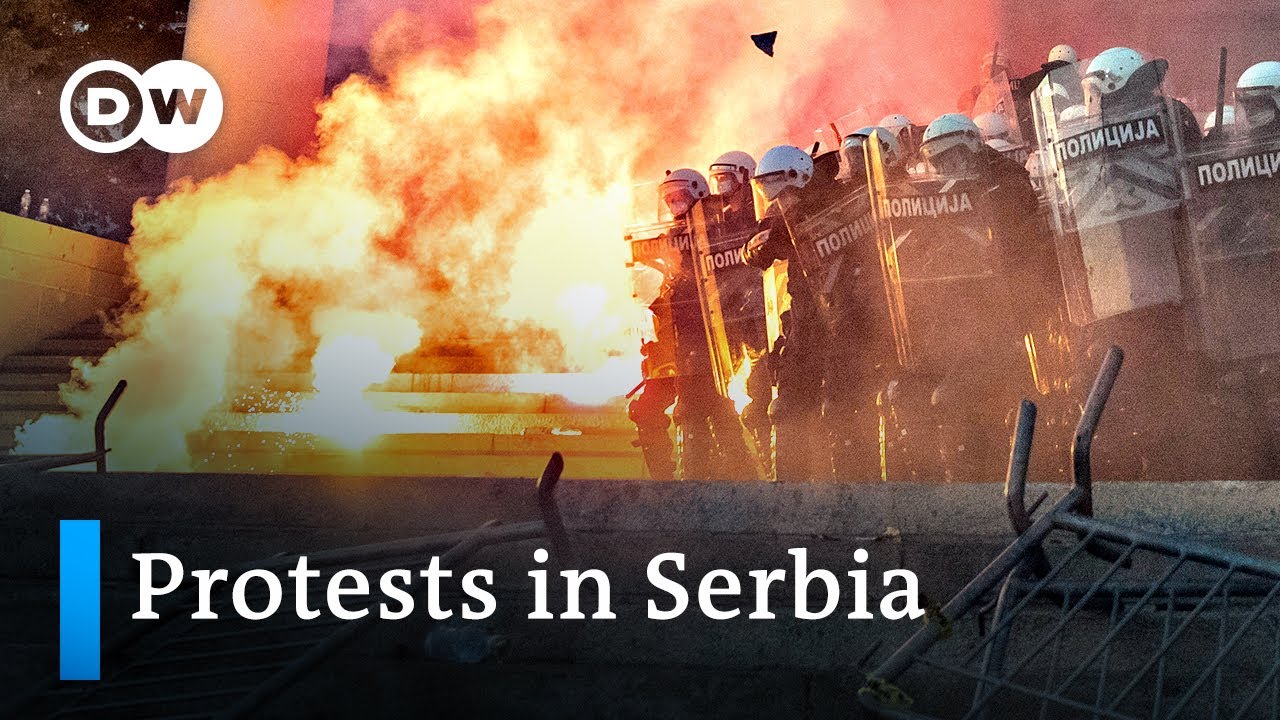
Riot police, tear gas, and burning city hall windows turned Belgrade into a battleground this week over a curfew that lasted barely a day.
Serbia’s capital and three other cities erupted into two consecutive nights of street violence on July 7 and 8, 2020, after President Aleksandar Vučić announced a weekend curfew to fight a resurgent coronavirus outbreak. What began as anger over the new restrictions quickly became something bigger: a confrontation over whether the government had misled the public about the virus to push through elections just weeks earlier.
- Clashes spread beyond Belgrade to Novi Sad, Niš, and Kragujevac, with demonstrators setting fire to part of Novi Sad’s City Hall and targeting the ruling Serbian Progressive Party’s offices in Niš.
- Protesters briefly broke into the National Assembly building in Belgrade on Tuesday night before riot police pushed them back out; Wednesday’s clashes involved tear gas, mounted police, dogs, and armored personnel carriers.
- Vučić reversed course on July 8, saying “most probably, there will be no curfew,” while stopping short of declaring a state of emergency and dismissing the unrest as politically driven.
A Curfew Announcement Lights the Fuse
The trigger was straightforward: daily case counts in Serbia had climbed past 350, hospitals were nearing capacity, and Vučić responded by announcing a weekend curfew. For a country that had already been through one lockdown earlier in the year, the prospect of another shutdown — announced with little warning — was the spark. But the anger ran deeper than the curfew itself. Protesters accused the government of lifting the original lockdown measures too quickly and too conveniently, timed to allow the June 21 parliamentary elections to go ahead, and of understating how bad the outbreak had actually become.
That combination — a sudden new restriction stacked on top of suspicion about the government’s honesty — is what turned frustration into confrontation almost overnight. Crowds gathered outside the National Assembly in Belgrade on Tuesday, and by nightfall some had broken into the building itself before riot police forced them back onto the street.
Wednesday Night Escalation
The situation intensified dramatically on Wednesday, July 8. In Belgrade, security forces brought out armored personnel carriers, mounted units, and police dogs as protesters hurled stones, bottles, flares, and firecrackers toward the lines. Officers responded with tear gas, and running clashes played out through the downtown streets as special anti-terror squad vehicles patrolled nearby. Some protesters threw canisters of gas back at police; others in the crowd carried crosses and religious symbols, and, according to footage aired by the regional broadcaster N1, appealed to both sides to hold back from violence.
The unrest wasn’t confined to the capital. In Novi Sad, Serbia’s second-largest city, demonstrators vandalized and set fire to part of City Hall. In Niš, the country’s third-largest city, protesters threw rocks at the headquarters of Vučić’s own Serbian Progressive Party. Kragujevac saw clashes as well, making this the broadest wave of street violence Serbia had experienced in years.
“Most probably, there will be no curfew.”
Injuries, Detentions, and Accusations of Heavy-Handed Policing
Over the two nights, dozens of police officers and civilians were hurt and scores of people were detained. Amnesty International and local outlets, including N1, circulated footage that appeared to show officers beating unarmed bystanders, raising pointed questions about whether the police response matched the scale of the threat on the ground. The images echoed complaints seen elsewhere over policing tactics during 2020’s wave of civil unrest, a debate that has also played out in American cities grappling with their own riot squad controversies that same year.
The crowds in Belgrade weren’t a single, unified bloc — religious demonstrators carrying crosses stood alongside right-wing groups and general anti-government protesters, all converging on the same target even if their grievances didn’t fully overlap. That mix made the gendarmes’ job harder and gave Vučić’s government an opening to paint the unrest as opportunistic rather than organic.
Vučić Backs Down Without Backing Off
Facing two nights of chaos in four cities, Vučić announced on July 8 that the weekend curfew was effectively off the table, saying “most probably, there will be no curfew,” even as he declined to declare a formal state of emergency. He also dismissed the demonstrations as politically motivated, a framing that put him at odds with protesters who insisted their anger was about hospital capacity and honest case counts, not partisan score-settling. The reversal calmed the immediate flashpoint, but it left the underlying dispute — over how Serbia handled its case data ahead of the June elections and whether the government reopened too fast — unresolved. It’s the same tension that has fueled arguments in other countries over whether governments reopened too soon as case numbers climbed back up, and it lines up with broader concerns about rising infection rates that were forcing leaders worldwide to make the same unpopular calls Vučić just made and then unmade.
Belgrade’s streets were quiet again by the weekend the curfew was supposed to start, but the grievance that lit the fuse — trust in the government’s coronavirus numbers — hadn’t gone anywhere. Vučić kept his emergency powers in his back pocket rather than declare a state of emergency, which means if Serbia’s case curve keeps climbing the way it was in early July, he’s got the same options on the table and a public that’s already shown it will take to the streets over them.

Inside the wildfires devastating the Pacific Northwest
What Ohio Voters Want In The 2020 Election
China denies accusations COVID-19 was made in a lab
Sanders and Warren slammed over “fairy tale” proposals in 2020 debate
The Race To Develop A Coronavirus Vaccine