

Hasan Minhaj Calls Out Congress Over Student Loans: ‘You Paid Far Less For Your Degrees’ | NBC News
 InfoSearched
A comedian walks into a congressional hearing room and tells lawmakers they got a better deal on college than everyone alive today.
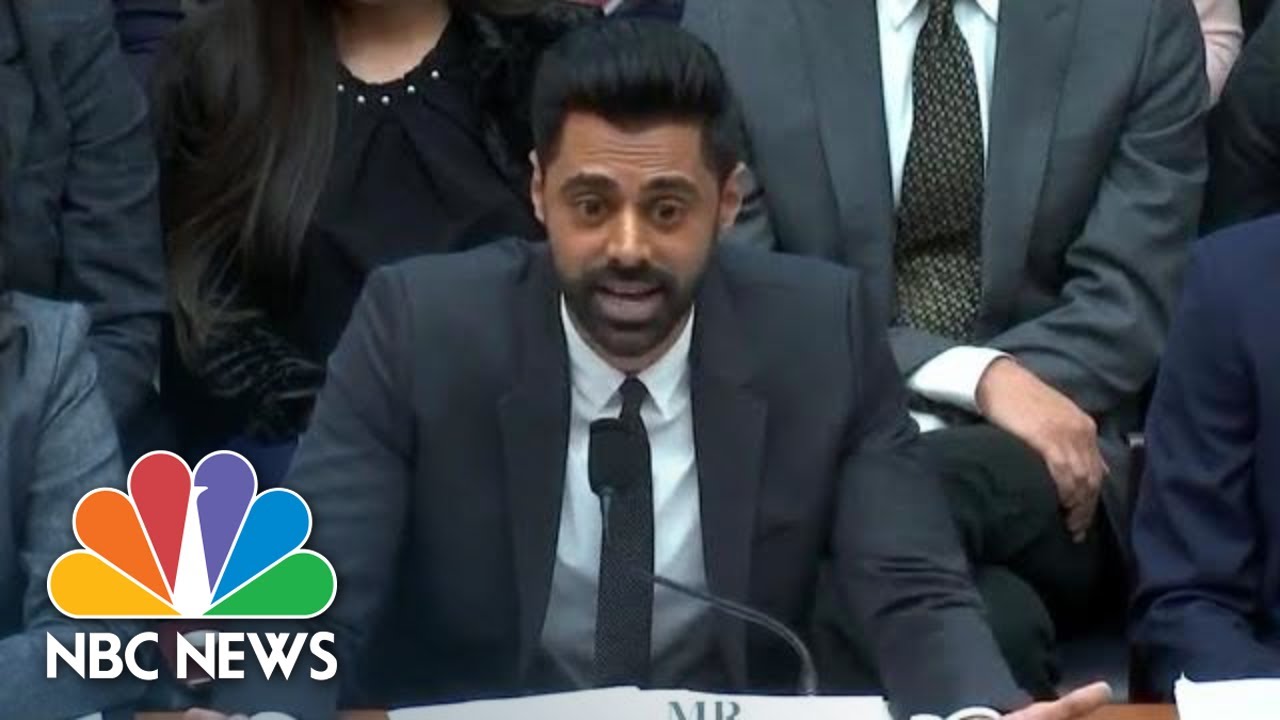
Hasan Minhaj isn’t a senator, an economist, or a lobbyist. He’s the host of Netflix’s Patriot Act, and on the morning of September 10, 2019, he sat before the House Financial Services Committee as an invited expert witness on the student debt crisis. Chairwoman Maxine Waters brought him in for a hearing titled “A $1.5 Trillion Crisis: Protecting Student Borrowers and Holding Student Loan Servicers Accountable,” and Minhaj used the platform to tell the committee, plainly, that they paid far less for their own degrees than the 44 million Americans currently drowning in loans.
- Minhaj testified that 44 million Americans collectively owe more than $1.6 trillion in student debt.
- He told committee members directly that college costs had doubled or tripled while real wages rose only about 16 percent over the same stretch — meaning many lawmakers “paid far less for your degrees.”
- He argued borrowers are unfairly branded “deadbeats” for taking on debt to fund an investment in their own education, while being locked into predatory, for-profit servicers like Navient with no ability to choose their provider.
The Numbers Minhaj Put on the Table
Minhaj didn’t lean on anecdotes alone — he leaned on the math the committee already had in front of it. The $1.6 trillion figure covers 44 million borrowers nationwide, a debt load that now outpaces credit card debt in the United States. His central comparison was blunt: tuition has climbed two to three times over, while wages for the people paying it have crawled up roughly 16 percent. That gap, he argued, is the entire crisis in one sentence, and it’s a gap most sitting members of Congress never had to cross when they were in school.
The comparison mattered because it wasn’t abstract — Minhaj was speaking to people who had, in many cases, graduated decades earlier under a completely different cost structure. He wasn’t asking them to imagine the burden. He was asking them to recognize they’d dodged it.
Pushing Back on ‘Personal Responsibility’
Much of Minhaj’s testimony targeted a specific piece of political rhetoric: the idea that student borrowers simply need to exercise more “personal responsibility.” He rejected that framing outright, arguing that young people who borrowed to pay for school made a reasonable investment in their own future at a time when a degree was sold to them as the baseline requirement for middle-class stability.
Borrowers are treated like deadbeats for doing exactly what they were told to do — invest in their education — while getting stuck with servicers like Navient they never had the option to choose.
That’s the core of his argument: the debt isn’t a story about irresponsibility, it’s a story about an industry — for-profit loan servicing — that borrowers are funneled into without consent or choice, then blamed for the outcome.
Navient and the Servicer Problem
Minhaj singled out Navient by name as an example of the predatory servicing model borrowers get trapped in. Unlike choosing a credit card company or a bank, student loan borrowers generally have no say in which servicer manages their debt — a structural issue the hearing itself was named to address. That lack of choice, paired with servicing practices that have drawn scrutiny from regulators and state attorneys general in years prior, was central to why Waters convened the hearing in the first place.
The broader debate over how deeply Washington should intervene in markets like this one — and where the line sits between market discipline and consumer protection — echoes across other corners of the economics beat, from bank bailouts to healthcare pricing.
The ‘Too Big to Fail’ Argument
Minhaj closed his testimony with the line that carried the hearing: if the federal government could step in and bail out the banking system, then 44 million Americans carrying a collective $1.6 trillion in student debt should be treated the same way — as too big to fail. It was a direct callback to the 2008 financial crisis playbook, repurposed as a challenge to the committee sitting in front of him.
He urged Congress to grant borrowers basic protections — the kind of guardrails already common in other lending markets — rather than continuing to treat the debt as an individual failing. Whether that argument gains traction depends entirely on what the committee, and the broader political fight over education policy, does with it next.
Minhaj’s turn in the witness chair lasted a matter of minutes, but it landed because he framed a policy hearing the way he frames a Patriot Act episode — with a direct, personal jab at the people in the room. Whether Waters’ committee moves any actual servicer-accountability legislation off the back of this hearing is the next thing to watch; the testimony itself is done, but the $1.6 trillion number he put on the record isn’t going anywhere.





US signs immigration agreement with Guatemala
Trump’s Baltimore battle threatens to overshadow strong economy
California Cannabis Businesses Fear State’s Legal Industry Could Collapse
How San Francisco Has Kept Its Coronavirus Numbers Low
Pres. Trump Cries ‘Bullsh*t’ As New Details Reported On Ukraine Aid Freeze – Day That Was | MSNBC